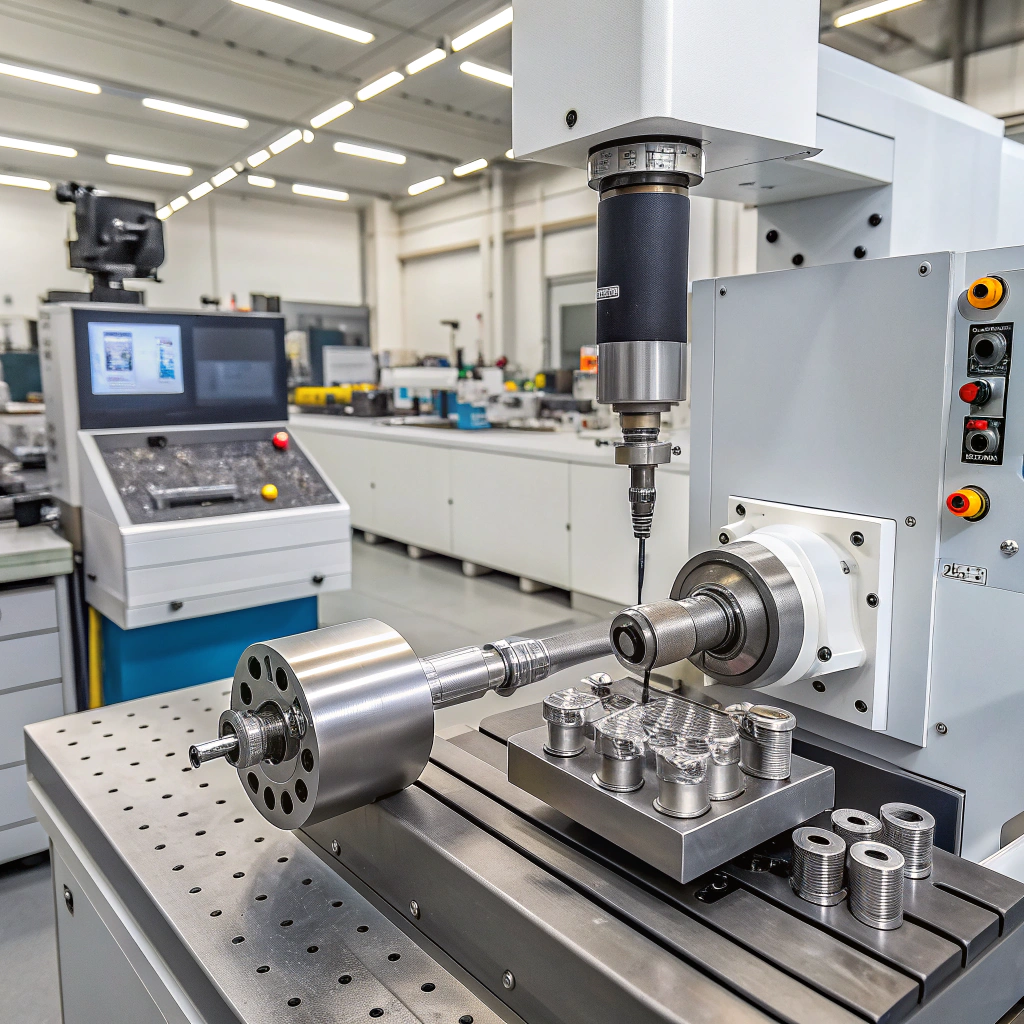
I once faced a critical project where standard machining could not hit the tolerance needed — that’s when ultra precision machining changed everything.
Ultra precision machining services refer to machining processes capable of achieving extremely tight tolerances (often in the sub‑micron or single‑digit micron range), exceptional surface finishes, and complex geometries, typically for high‑end industries such as aerospace, optics, medical devices and semiconductors.
Let me walk you through why you might choose Chinese machining services, how to source ultra precision machining from China, and what trends are shaping China’s machining service industry.
What are the benefits of choosing Chinese machining services?

Considering overseas manufacturing can feel risky, especially when precision is critical. Yet China offers unique advantages.
Choosing Chinese machining services can bring cost efficiencies, large manufacturing capacity, rapid scaling, and increasingly strong quality controls — making them a competitive option for ultra‑precision work when managed correctly.
When I evaluated sourcing options, these key benefits stood out:
Cost advantages and scale
China has developed a massive machining sector with deep capacity. According to recent data, Chinese CNC machining services can offer 30‑50% cost savings compared to Western suppliers, while delivering competitive quality through advanced equipment and experienced labour.
Access to large capacity and wide capabilities
If you need ultra precision and still want reasonable quantities, China offers many shops capable of high precision, micromachining, tight tolerances and complex parts.
Improved quality and global competitiveness
In the past, some buyers hesitated to source precision components from China over quality concerns. But the landscape is shifting: quality‑control in top Chinese machining factories has moved from “experience‑based” to “data‑driven”.
Strategic supply‑chain benefits
If you already source other parts or components from Asia, working with a Chinese machining partner may simplify logistics, reduce transit times, consolidate suppliers, and leverage regional manufacturing clusters.
Table: Benefits of Chinese machining services
| Benefit | What it offers you |
|---|---|
| Cost savings | Lower labour/overhead, larger capacity |
| High capacity & scalability | Able to handle both prototypes and moderate batches |
| Improved quality systems | Data‐driven QC, more mature processes |
| Manufacturing ecosystem | Access to multiple services and supply chain |
| Strategic logistics | Regional manufacturing hubs, global shipping |
How to source ultra precision machining from China?

Finding the right ultra precision machining partner in China requires care, because tolerances, surface finish, and process control matter a lot at that level.
To source ultra precision machining from China accurately, you must define your requirements clearly, vet the supplier’s capabilities (equipment, tolerances, inspection), manage communication and quality control, and plan logistics and risk mitigation thoroughly.
Here are practical steps I follow:
Step 1: Define your technical specification and requirements
- Specify tolerances (for example ±2 µm or ±5 µm), surface finish (e.g., Ra 0.2 µm), material, heat treatment, coatings or post‑process.
- Provide detailed drawings, 3D CAD files, GD&T call‑outs, surface finish requirements, and if possible sample parts or reference standards.
- Specify inspection requirements: will you require CMM reports, surface metrology, flatness/parallelism, form/position tolerance?
Step 2: Supplier short‐listing and capability verification
- Seek suppliers in China that advertise “ultra precision machining”, micromachining, tight tolerances, aerospace/medical components.
- Ask for their equipment list, quality certifications, and example parts.
- If possible, perform or request a factory audit.

Step 3: Contracting and process planning
- Agree on clear deliverables: tolerances, surface finish, inspection reports, number of parts, material certificate, heat treatment certificate, etc.
- Include acceptance criteria and plan for trial runs and production lots.
Step 4: Communication and monitoring
- Maintain regular updates and request in‑process data.
- Engage third‑party inspection when needed.
- Monitor lead time and transit quality closely.
Step 5: Quality control, shipping and follow‑up
- Inspect incoming parts and collect performance data.
- Provide feedback to supplier and scale as needed.
Table: Key sourcing checklist
| Item | What to verify |
|---|---|
| Technical specs | Tolerances, surface finish, materials |
| Supplier capabilities | Equipment list, inspection tools |
| Quality system & certifications | ISO, AS9100, inspection infrastructure |
| Sample/previous work | Similar parts, references |
| Contract terms | Deliverables, accept/reject criteria |
| Communication & monitoring | Regular updates, data sharing |
| Shipping & logistics | Packaging, transit controls |
What are the trends in China's machining service industry?

The machining service industry in China is not static — it is evolving rapidly, particularly in the high precision and ultra precision segments.
The major trends include increased automation and smart manufacturing, shift from low‑cost to high‑value services, growth in precision and micromachining capabilities, cluster development, and stronger quality systems — all of which are reshaping how machining services operate in China.
Trend 1: Automation, Industry 4.0 and smart factories
China’s machine tool and machining service industry is embracing digital integration, robotics, IoT, real‑time data monitoring and predictive maintenance.
Trend 2: Shift from low‑end cost competition to mid‐high value, high precision
The sector is moving away from low‑margin work and focusing on high‑value precision components for aerospace, medical, optics and electronics.
Trend 3: Growth in precision machining and micromachining
More suppliers now claim to achieve tolerances in the ±2–5 µm range, with surface finishes in the sub‑micron category.
Trend 4: Cluster development and specialization
Machining suppliers are forming tight industrial clusters in regions like Guangdong, Jiangsu, and Zhejiang — enabling faster service and integration.
Trend 5: Rising investment in machine tool industry & government support
With national policy supporting industrial upgrades, capital investments are being made into ultra precision equipment, training, and global quality standards.
Trend 6: Quality control and global customer expectations
Suppliers are now adapting to global QA standards, using CMMs, SPC systems, and traceable inspections to meet global buyer expectations.
Table: Summary of key trends
| Trend | Implication for ultra precision machining services |
|---|---|
| Automation & smart manufacturing | Better consistency, lower variability, faster turnaround |
| Movement to higher‑value services | More suppliers focused on precision rather than just cost |
| Micromachining capability growth | Wider choice of suppliers able to meet ultra tight specs |
| Cluster development | Localised supply chains, faster support services |
| Investment & government support | Improved equipment, processes, higher industry standard |
| Enhanced quality systems | Higher reliability, traceability, fit for global standards |
Conclusion
Ultra precision machining services offer the kind of tight tolerances, exceptional surface finishes and complex part geometries that many industries demand. By choosing Chinese machining services you may gain cost savings, capacity and growing quality, but only if you define your needs clearly and select suppliers carefully. China’s machining service industry is rapidly evolving — automation, micromachining capability, higher value services and improved quality systems are all working in your favour. With proper sourcing strategy, I believe you can successfully tap China’s ultra precision machining ecosystem for high‐end, demanding parts.