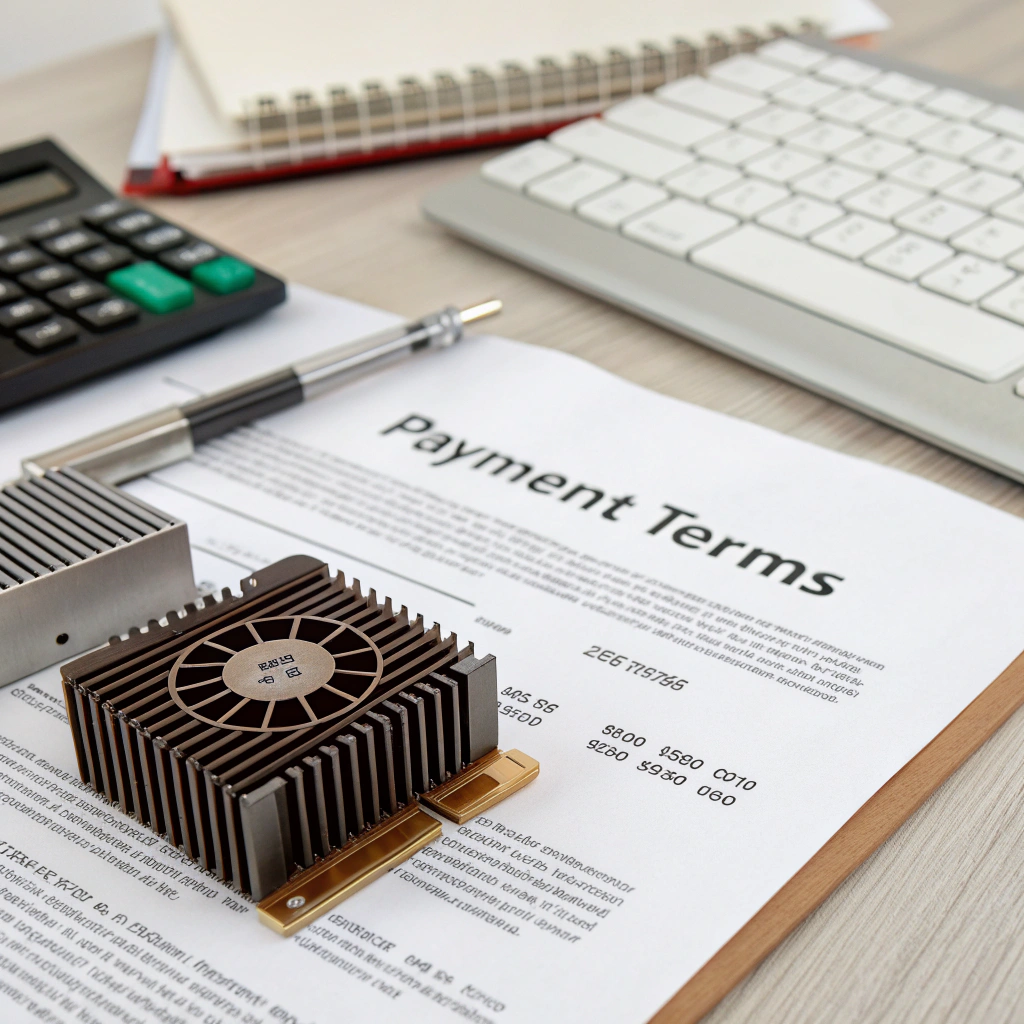
When I first started working with international buyers, the most frequent question wasn’t about quality or price — it was “What are your payment terms?”
Most heat sink manufacturers offer structured terms like T/T, L/C, or partial deposits to balance risk and trust between buyer and factory.
Understanding these terms helps you plan cash flow, avoid delays, and build smoother long-term relationships.
What payment terms do heat sink manufacturers offer?
Every manufacturer has different ways of handling money. Some prefer full prepayment, others ask for a 30% deposit, and some work with open credit — but that usually comes after a few successful orders.
Typical payment terms in heat sink manufacturing include T/T (bank transfer), L/C (letter of credit), D/P (documents against payment), and credit terms for trusted clients.
Common payment terms and conditions
| Payment Term | Description | When It’s Used |
|---|---|---|
| 100% T/T in advance | Full payment before production | Small orders, new clients |
| 30/70 T/T | 30% deposit, 70% before shipment | Most common for standard orders |
| L/C at sight | Bank guarantees payment to supplier | Large orders, high trust |
| D/P | Buyer pays upon receiving documents | Medium trust, with risk control |
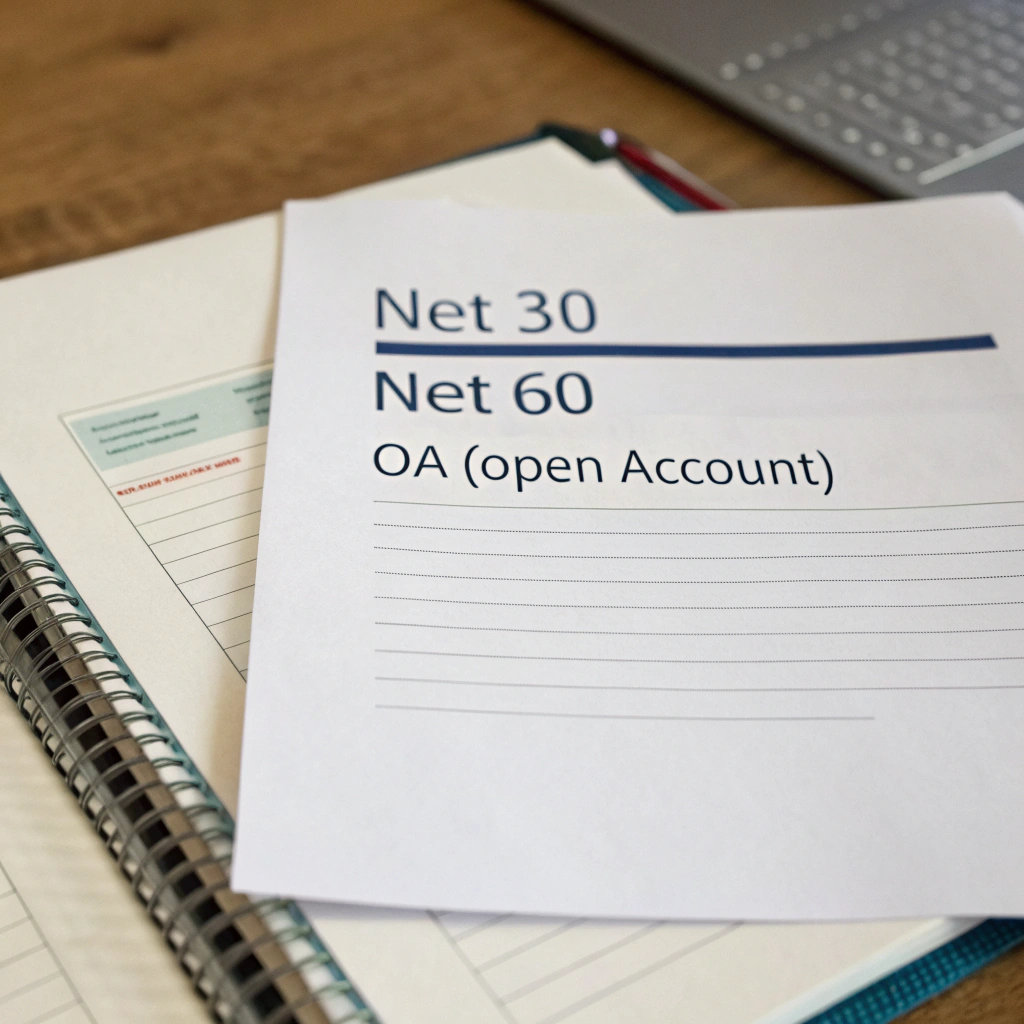
| Net 30 / Net 60 | Payment 30 or 60 days after invoice | Only for long-term buyers |
| OA (Open Account) | Supplier ships before receiving funds | Rare, only with very close buyers |
In my own business, I usually ask for 30% upfront and 70% before shipment. This works well to confirm the order and also allows me to prepare materials and allocate machine time.
If a client has ordered from us before and always paid on time, we might consider a Net 30 plan — but that’s after a long history of trust.
Why T/T is most common
Bank transfer (T/T) is fast, easy to trace, and secure. Most factories are comfortable using it because it gives partial assurance at the start and final security before shipping. It also avoids the paperwork required for letters of credit.
Why are certain payment terms preferred?
When I receive a request for open account terms from a brand new buyer, I have to politely explain why that’s not feasible — not because I don’t want to trust, but because the factory has real risk.
Suppliers prefer deposit-based terms because they reduce financial risk, ensure production commitment, and help cover up-front material costs.
Reasons manufacturers prefer deposits
1. Material pre-purchase
We often need to buy aluminum billets or copper before starting your order. A deposit helps us secure that material without using factory cash flow.
2. Production scheduling
A deposit confirms the seriousness of the buyer. Without it, we risk holding up production lines for buyers who may cancel later.
3. Exchange rate stability
Deposits help lock in costs and reduce risk if currency rates shift between order and shipment.
4. Financial discipline
Requiring payment before shipment ensures that the factory doesn’t face unpaid invoices after delivery.
5. Preventing fraud
In international trade, there’s risk on both sides. A deposit builds mutual commitment before higher-value goods are shipped.
From my experience, most disputes I’ve seen in this industry come from unclear payment expectations. Once terms are agreed and followed, trust grows quickly.
How to negotiate payment terms?

I’ve had buyers tell me, “We only work on Net 60.” My answer? “That’s possible — but only after we’ve built a relationship.” Payment terms are negotiable, but only if both sides see reliability and benefit.
To negotiate better terms, buyers should demonstrate credibility, order consistently, and build a payment history with the manufacturer.
Strategies for buyers
1. Start with small orders
If you’re a new client, place a smaller order first. Fulfill payment terms promptly. This sets the tone and builds trust.
2. Share your credentials
Let us know your company background, years in business, and bank references. Transparency builds confidence.
3. Offer references
If you’ve worked with other suppliers who can vouch for your payment behavior, mention that.
4. Ask about step-up terms
Propose something like: “Can we do 30/70 for the first two orders, then Net 30 if all goes well?”
5. Offer collateral
Some buyers negotiate better terms by providing guarantees — either in writing or through escrow systems.
6. Build a long-term forecast
Let your supplier know if you plan to order regularly. Predictable revenue makes it easier for us to extend credit.
Table: Negotiation roadmap
| Buyer Action | Result |
|---|---|
| Small first order, quick payment | Builds credibility |
| Clear financial profile | Improves negotiation position |
| Consistent ordering history | Opens door for Net terms |
| Mutually signed agreement | Reduces misunderstanding |
| Willingness to compromise | Creates win-win deal |
In my own operations, I’ve changed terms from strict 100% prepay to 50/50 or even Net 30 — but only when I know I can trust the buyer. When that trust is there, I’m also more willing to prioritize their lead times.
What trends affect manufacturing payment practices?

Payment practices don’t stay the same forever. Over the past few years, changes in global finance, technology, and risk perception have all influenced how manufacturers approach terms.
Trends like digitization, global trade shifts, and supplier risk management have reshaped how payment terms are offered and enforced.
Major trends to watch
1. Digital transactions
Online invoicing, e-banking, and platforms like Payoneer or Wise are making cross-border payments faster and cheaper. Many suppliers now accept digital wallets or credit payments via secure channels.
2. Risk awareness post-COVID
Since the pandemic, many factories tightened payment terms due to higher business failure rates. Cash flow security became a higher priority than sales volume.
3. Inflation and currency risk
With material and energy prices rising, suppliers can’t afford to carry costs for months. This drives a preference for deposits and faster final payments.
4. Supplier portals and automation
Bigger buyers are using supply chain portals that automate invoice matching and track payment cycles. This adds clarity but may reduce flexibility.
5. Trade insurance
Some buyers now work with third-party insurance to cover default risk. This allows better terms with less supplier worry.
6. ESG and ethical sourcing
Some banks and institutions now tie financing options to sustainability and traceability. That can influence payment cycle decisions.
From my point of view, the best buyers acknowledge these challenges and approach negotiation not as pressure, but as partnership. When that happens, both sides win.
Conclusion
Payment terms for heat sink manufacturers usually follow a 30/70 or T/T structure to balance risk and cash flow. With trust and volume, better terms like Net 30 or L/C may be possible. By understanding supplier priorities, planning negotiation steps, and watching global trends, buyers can secure favorable payment structures without risking the relationship.