In today’s global manufacturing environment I often field the choice between OEM versus ODM for custom aluminium heat sinks.
Understanding which service fits your business model helps you decide whether you provide your own design or lean on the supplier’s design‑capabilities.
Let’s look at what each service includes, how collaboration works, benefits of ODM partnerships, and how customization differs in OEM vs ODM.
Which services fall under OEM support?
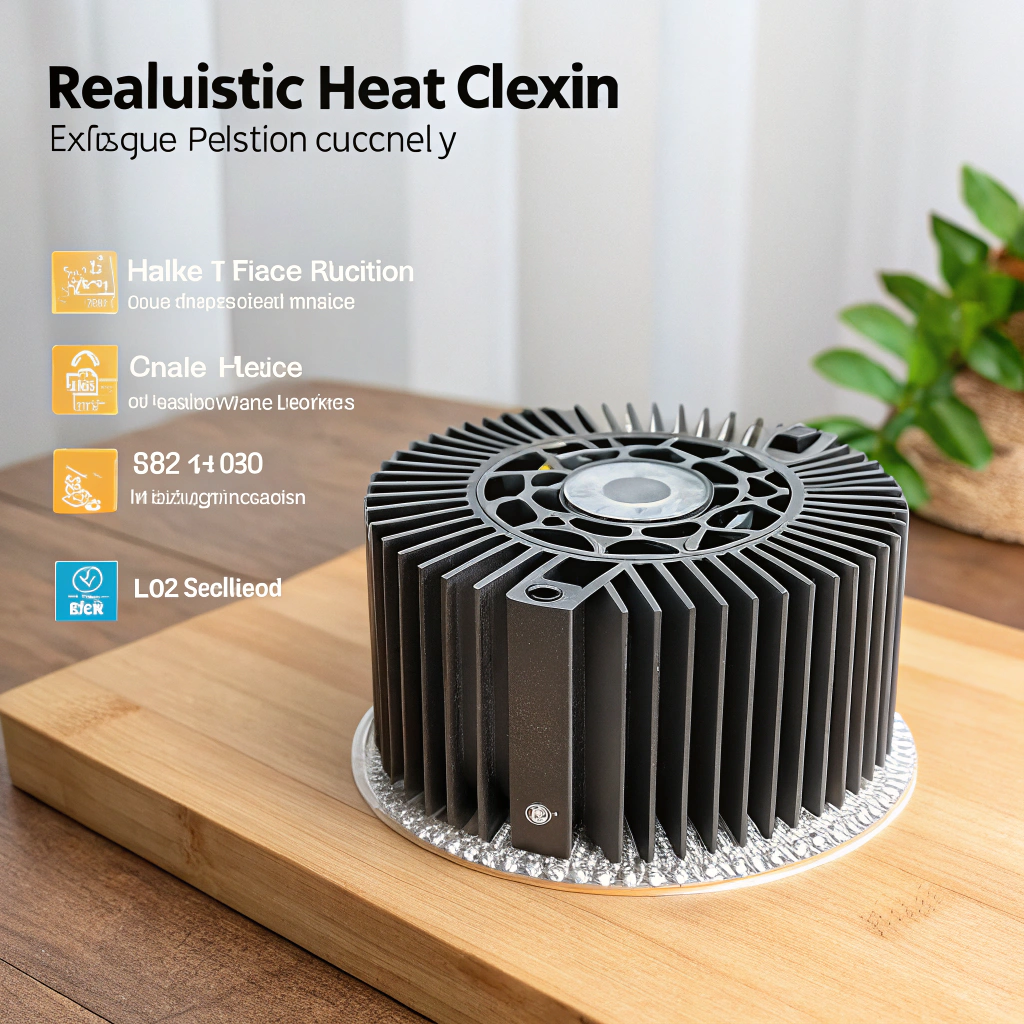
When I offer an OEM (Original Equipment Manufacturer) service for aluminium heat sinks, here’s how it typically plays out:
As OEM, you (the buyer) supply the detailed design, material spec, tooling drawings, and brand; the manufacturer produces according to your specification.
Key aspects of OEM support
- You provide full or near‑full product specification: extrusion profile, alloy (e.g., 6063‑T5 or 6061‑T6), surface finish (anodised, powder‑coated), length, machining, assembly instructions.
- The manufacturer handles production: extrusion, cutting, CNC machining, finishing, quality inspection, packaging and logistics.
- Intellectual property (IP) stays with you: you control the design, tooling, brand, and often the supplier contracts guarantee exclusivity.
- The manufacturer may offer DfM (design‑for‑manufacture) advice: improving your design for manufacturability, cost, and lead‑time.
- Tooling, mold or die cost: Since you provide the design, you often bear the cost of any special tooling required for custom profile.
- Custom brand and supply chain: The final product bears your brand and your quality/traceability systems.
Why choose OEM for heat sink manufacturing
- Full control: You define the exact thermal path, extrusion geometry, tolerance, finish and brand.
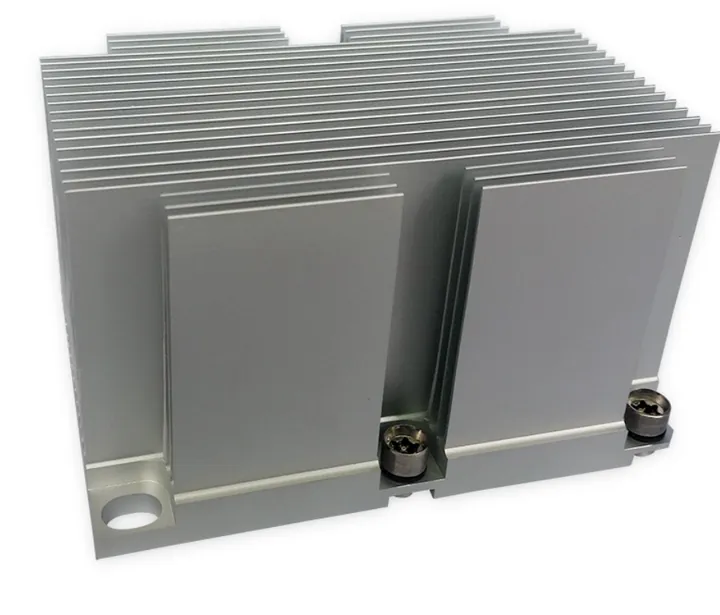
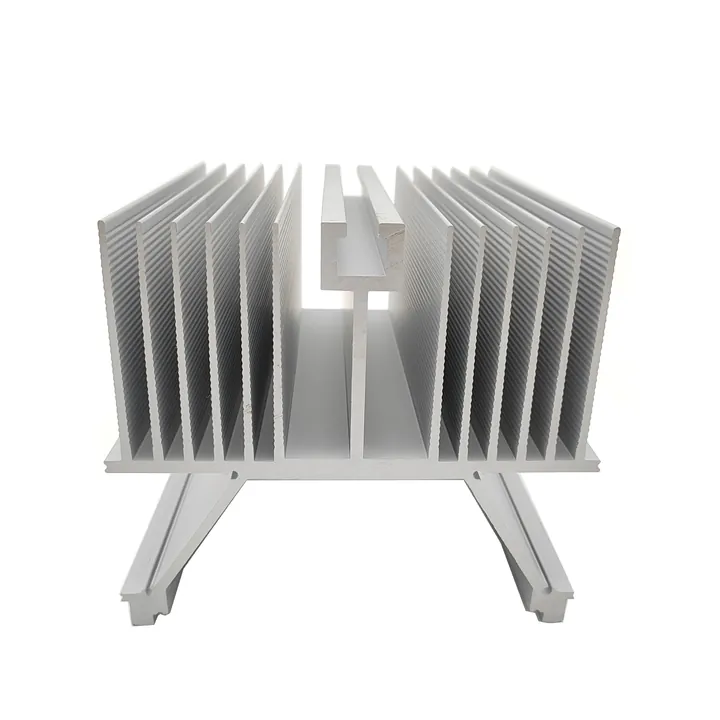
- Unique product: The heat sink can be highly differentiated (for example a bespoke LED lighting extrusion with integrated fins, mounting holes, custom coating) which is ideal for your B2B customers who require custom aluminium profiles for industrial use.
- IP ownership: You own the design and branding, giving you competitive advantage and control over future sourcing.
In my business context (custom aluminium extrusions, B2B supply, global export) choosing an OEM route makes sense when I already have a design or when the customer has specific engineering requirements and wants the brand/part‑number under their control.
How does ODM design collaboration work?
When I work under an ODM (Original Design Manufacturer) model for heat sinks, the process shifts:
Here the manufacturer offers design‑capability and a platform of existing products or semi‑custom platforms; you collaborate on tweaks or select from the supplier’s design, then brand the final product as your own.
How the ODM collaboration typically runs
- The manufacturer presents a catalogue or library of existing heat sink profiles, modules and assemblies already developed and tested.
- You select one of those or propose a modification: adjust fin density, material grade, surface finish, mounting interface, or thermal performance target.
- The manufacturer carries out the detailed design, prototyping, testing and tooling. You provide your brand, logo, packaging and maybe minor cosmetic changes.
- Once approved, full production begins. The manufacturer owns most of the IP (or retains rights over the design) while you market under your brand.
- You can usually go to market faster because the base design is already developed, reducing R&D time and cost.
Benefits of this collaborative model
- Faster time‑to‑market: Because the design work is already mostly done, development cycles shrink.
- Lower design cost: You save on full development since the manufacturer has engineering resources.
- Reduced risk: The manufacturer has prior experience with the design family and can ensure manufacturability and performance.
- Flexible brand solutions: You get a branded version of a proven product rather than starting from scratch.
For example, if your company needs a standard industrial aluminium heat sink for a lighting fixture and you don’t require totally novel geometry, an ODM model provides a good balance: choose an existing platform, tweak as needed, brand it, and export globally.
What benefits come from ODM partnerships?
From my experience running custom aluminium extrusion manufacturing and export, here are the key benefit highlights when opting for an ODM partnership:
- Speed: Since the design is partially or fully developed by the manufacturer, you skip many engineering phases.
- Cost‑efficiency: Fewer hours spent on design, fewer failed prototypes, and potential economies of scale from the manufacturer’s prior tooling.
- Lower risk: Proven design platforms mean fewer surprises in production, easier performance validation and easier compliance documentation.
- Simplicity: You focus on branding, packaging, and market channels while the manufacturer manages design, manufacture and often supply chain.
- Access to supplier expertise: The manufacturer’s R&D team may bring thermal simulation, material selection, surface treatment expertise which you might not have in‑house.
- Scalability: As exports ramp (e.g., Africa, North America, Europe, Middle East), an ODM partner with production capacity and logistics experience helps scale with you.
In my work supplying global clients with industrial aluminium heat sinks, having an ODM option means I can offer customers a quicker path to a well‑engineered product without them having to invest heavily in design from scratch.
Are customization levels different in OEM vs ODM?
Yes — the level and nature of customization differ significantly between OEM and ODM. From my viewpoint:
Customization in OEM
- High degree of customization: Geometry, materials, finish, assembly, branding, packaging.
- You control design details: fin count, extrusion profile, mounting holes, CNC features, surface treatment options (anodising, wood‑grain, powder coating).
- Typically higher tooling and engineering cost: Because you often require new dies, bespoke assemblies or finishes.
- Time to market may be longer: More design, prototyping, validation required.
- Ideal when you need unique part numbers, exclusive design, competitive differentiation.
Customization in ODM
- Moderate customization: Typically you choose from a design platform but can request limited modifications. For example, you might change colour, logo, minor geometry tweaks, surface finish.
- Less design freedom: Major geometry changes may not be feasible or may reduce the benefits of the pre‑designed platform.
- Lower tooling/engineering cost: Because existing tooling or design architecture is reused.
- Faster to launch: Less new engineering time.
- Ideal when you need a branded product quickly, cost‑effectively, and don’t need totally unique geometry.
Summary comparison
| Feature | OEM Model | ODM Model |
|---|---|---|
| Design ownership | Buyer designs, buyer owns IP | Manufacturer designs, manufacturer often owns IP or shares with buyer |
| Custom geometry & material | High flexibility | Limited to modifications of existing design |
| Tooling / engineering cost | Higher upfront cost | Lower upfront cost |
| Time to market | Longer development time | Shorter development time |
| Brand exclusivity | High – unique product for buyer | Moderate – design may exist elsewhere |
| Best for | Unique product, full control | Quicker launch, lower cost, standardised product |
In my case as a custom aluminium extrusion manufacturer, when I offer both OEM and ODM services I clearly outline these distinctions to my B2B customers (large building firms, machinery manufacturers, lighting companies). That way they choose based on their priorities: bespoke thermal module with unique profile vs cost‑effective branded version of a proven heat sink.
Conclusion
Deciding between OEM and ODM for heat sink production is a strategic choice. If your business has distinct design needs, strong IP position and wants full control – go OEM. If you prefer faster time‑to‑market, lower upfront cost and can accept some design limits – choose ODM. I work with clients globally to tailor the right model for their heat sink needs, taking into account materials (6063‑T5, 6061‑T6), surface treatments, volume, and export markets.