
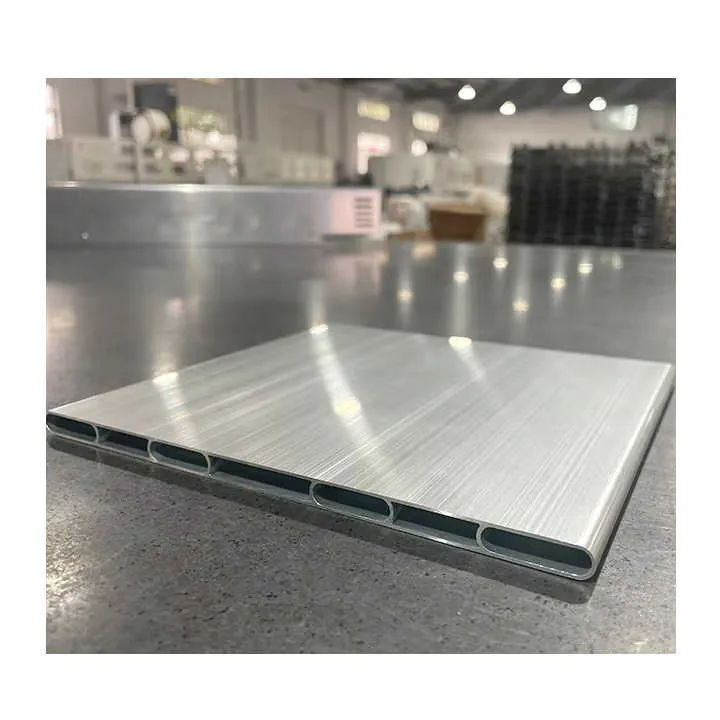

Before CNC, machining required hand cranks, manual setups, and constant supervision. Complex parts were hard to repeat and easy to mess up.
The first CNC machine was developed in the 1950s at MIT by John T. Parsons and Frank Stulen, introducing automated, programmable control to machining.
This breakthrough sparked a transformation in manufacturing, from manual milling to digital control, forever changing how parts were made.
How was the first CNC machine developed?
CNC didn’t arrive overnight. It evolved through wartime innovation, early computers, and bold engineering.
The first CNC machine was created by adapting a traditional milling machine to follow punched-card instructions, allowing it to move and cut automatically.
Timeline of CNC's Birth
| Year | Event |
|---|---|
| 1949 | John T. Parsons proposes numerically controlled machining to the U.S. Air Force |
| 1950 | MIT’s Servomechanisms Lab begins development |
| 1952 | First prototype NC machine built at MIT |
| 1958 | First commercial NC machine installed |
| 1960s | Computers begin to replace punch cards |
| 1970s | CNC (with computer control) replaces NC |
How It Worked
-
Designing Curves for Aircraft Skins
Parsons was trying to automate the cutting of precise curves for helicopter blades and aircraft panels. Manually, these were difficult and slow to produce. -
Using Punch Cards for Control
Engineers used punch cards to encode movement instructions for a milling machine — telling it how far to move in X, Y, and Z directions. -
Servomechanisms for Precision
MIT used feedback systems (servo motors) to ensure the machine followed exact positions — a key leap beyond just automation. -
Integration with Computers
As digital computing grew, these machines evolved to use early computers instead of punch cards, giving rise to Computer Numerical Control: CNC.
This system could produce consistent, complex shapes without a machinist guiding every move — a massive shift from all previous machine work.
Why was CNC technology revolutionary?
Before CNC, making custom or complex parts meant manual labor, expert operators, and time-consuming trial and error. Mass production was rigid and limited.
CNC technology revolutionized manufacturing by making precision machining programmable, repeatable, and scalable.
Key Breakthroughs Brought by CNC
-
Precision Control
Machines could now follow exact coordinates, producing parts with tight tolerances. -
Repeatability
Once programmed, the machine could produce identical parts endlessly — perfect for mass production. -
Flexibility
Changing from one part to another was as simple as loading a new program, unlike retooling whole lines manually. -
Reduced Human Error
Machinists no longer had to manually track every cut, reducing mistakes and increasing safety. -
Complex Geometry Made Easy
Intricate curves, pockets, or 3D shapes that were nearly impossible manually became standard practice.
Impact on Industry
| Area | Pre-CNC | Post-CNC |
|---|---|---|
| Part Consistency | Manual variation common | Perfect repeatability |
| Setup Time | Long setups per part | Quick program changes |
| Labor Skill Need | Highly skilled operators | Programmers + minimal supervision |
| Production Speed | Slow, tool changes manual | High-speed, auto tool changers |
| Part Complexity | Limited by hand control | Any shape with CAD/CAM |
CNC not only improved existing industries but also enabled new ones — from electronics to aerospace — that rely on micro-precision parts.
Which company first developed CNC?
While MIT did the core research, real machines needed manufacturers to build and sell them. Several U.S. companies stepped in to commercialize the tech.
The first CNC machines were commercialized by Giddings & Lewis and other early builders, using designs developed at MIT.
Key Players in CNC Commercialization
| Company | Role in CNC Development |
|---|---|
| Giddings & Lewis | Built first commercial NC machines for industry |
| MIT (Servomechanisms Lab) | Developed the first prototype machine |
| Cincinnati Milacron | Advanced control systems for industrial CNC |
| General Electric | Built electronics and controls for CNC |
| Bridgeport Machines | Adapted mills for CNC control |
Why Giddings & Lewis Matters
Giddings & Lewis (now part of Fives Group) took the MIT prototype and made it into a working product. They created machines that aircraft and automotive companies could actually install and use — not just in labs.
They worked closely with government contracts to deliver the first industrial-use NC machines by the late 1950s.
Other companies like Cincinnati Milacron followed quickly, adding better computer controls, tool changers, and compatibility with new software.
By the 1970s, many machine makers had adopted CNC, and it became a worldwide standard for manufacturing.
Conclusion
The first CNC machine was born from MIT's lab and powered by the vision of John T. Parsons. It replaced human motion with programmed logic — a shift that changed how the world makes everything. From early punch cards to today’s cloud-connected mills, CNC automation remains one of the most important inventions in modern manufacturing.




