When your CNC machine fails to deliver precise cuts, poor spindle performance might be the hidden cause. Many overlook it, but it’s the core of the entire system.
A CNC spindle is the rotating axis of a machine that holds the cutting tool and drives its motion. It plays a critical role in machining by rotating at high speed and providing torque to shape, mill, or engrave materials.
If you want cleaner cuts, faster cycles, or longer tool life, understanding your spindle is the key. Let's look deeper into what it does and why it matters.
How does a CNC spindle operate in machining?
When your cut quality drops or chatter marks appear, the spindle may be the culprit. It’s the part spinning your tool, and it's doing more than just turning.
A CNC spindle operates by using electric power to rotate a cutting tool at a controlled speed. It transfers torque and motion to the tool, enabling accurate material removal.
Inside a CNC machine, the spindle gets power from a motor—either directly or through a belt. This motor starts the rotation. The spindle itself is mounted with precision bearings. These keep the rotation steady and reduce vibration.
The rotation speed is controlled by a Variable Frequency Drive (VFD). It adjusts the motor's speed in real-time, allowing the operator or machine software to choose the best RPM for each tool and material.
Some spindles are air-cooled. Others use water-cooling. This keeps the heat low, which protects both the spindle and the tool. High heat leads to poor tolerances and early wear.
Types of Spindle Drive Systems
| Type | Description | Use Case |
|---|---|---|
| Direct Drive | Motor connected directly to spindle | High-speed applications |
| Belt Drive | Uses belts and pulleys | Better torque control |
| Gear Drive | Uses gears to transmit power | Heavy-duty cutting |
CNC spindles also play a role in tool change automation. Automatic tool changers (ATCs) connect with the spindle to switch tools without manual help. This adds speed and consistency.
In 3-axis CNC systems, the spindle moves vertically (Z-axis). In more complex 5-axis machines, it tilts and rotates, allowing curved and angled cuts.
Without a working spindle, the machine can't cut. It’s that simple. It’s not just about spinning. It’s about how precise and stable that spin is.
Why is the spindle important in CNC machines?
If the spindle doesn’t work right, the rest of the CNC machine can't do its job. It’s the one part that touches the material directly.
The spindle is critical because it determines the accuracy, surface quality, and efficiency of the machining process. A high-performance spindle leads to better results and fewer defects.
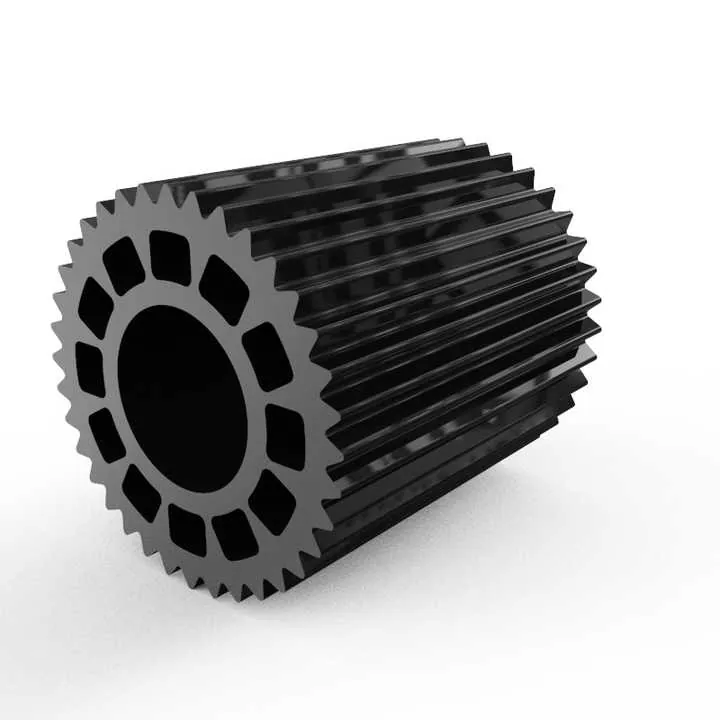
Let’s imagine machining without a high-speed spindle. You’d get rough surfaces, slow progress, and broken tools. In production, that means lost time and high costs.
Spindles control not only speed but also stability. A spindle with high runout (wobble) will create parts out of tolerance. Even small shifts in the spindle axis can ruin the final product.
Common Benefits of a High-Quality Spindle
- Precision: Low runout leads to accurate cuts.
- Speed: High RPM shortens cutting time.
- Tool Life: Smooth operation protects expensive tools.
- Finish Quality: Better surface finish reduces post-processing.
Tool chatter, noise, or unexpected vibration often point to spindle issues. Replacing or tuning the spindle can solve these problems fast.
In high-volume settings, downtime caused by spindle failure can be costly. That’s why factories often keep spare spindles on hand and schedule maintenance carefully.
Advanced spindles come with sensors. These can monitor temperature, load, and vibration. That data helps operators avoid failures before they happen.
The spindle isn’t optional. It’s central to the CNC's core function: converting raw material into precise parts.
What components make up a CNC spindle?
People often think of the spindle as one solid part, but it’s actually a system made of several precise components working together.
A CNC spindle includes the housing, bearings, shaft, motor (internal or external), cooling system, and tool holder—all of which work in sync to rotate and control the cutting tool.
Here's a closer look at each part and what it does:
Main CNC Spindle Components
| Component | Function |
|---|---|
| Spindle Shaft | Rotates with the cutting tool |
| Bearings | Keep the shaft stable and reduce friction |
| Housing | Holds the components together |
| Tool Holder | Grips and positions the cutting tool |
| Motor | Provides power for rotation |
| Cooling System | Removes heat from the spindle |
Spindle Shaft
This is the rotating core. It must be made of strong, balanced material. Any imbalance can cause vibration or tool breakage.
Bearings
Most high-speed spindles use ceramic or hybrid bearings. These can handle more heat and last longer. They’re key to keeping rotation smooth.
Tool Holder
This is where the cutting tool sits. It must grip the tool tightly but allow easy changes. Common types include ER collets and HSK holders.
Motor
In high-speed spindles, motors are built-in (integrated). Others are belt-driven from outside. Motor size and type affect torque and RPM.
Cooling System
Without cooling, the spindle can overheat and lose accuracy. Water-cooled systems are common in industrial machines. Air-cooled spindles are easier to maintain but less efficient at high loads.
Every part of the spindle contributes to overall performance. If any single part fails, the whole system suffers. That’s why choosing and maintaining quality components is critical.
Where is the spindle used in CNC machines?
The spindle may look like just one piece, but its role spans across multiple operations and machine types. It’s at the heart of almost every CNC task.
The spindle is used in CNC milling, turning, grinding, drilling, and engraving machines—wherever precise rotation of a cutting tool is needed to shape materials.
Let’s break down where and how spindles appear in different machines.
CNC Machines That Use Spindles
- Milling Machines: Spindles hold end mills or face mills for shaping surfaces and cutting features.
- Drilling Machines: Spindles spin drill bits to create holes of various sizes.
- Engraving Machines: Used for detailed surface marking.
- Router Machines: Often used for wood, plastics, or composites.
- Turning Centers: Though they often rotate the workpiece, many still use secondary spindles for tool operations.
- Grinders: Spindles rotate abrasive wheels to smooth or polish surfaces.
In each case, the spindle determines the type of tool you can use and the speed at which it works. This affects everything from material choice to job timing.
Industrial Applications
- Aerospace: High-speed aluminum and composite machining.
- Automotive: Engine part milling and surface finishing.
- Electronics: PCB drilling and engraving.
- Furniture: Wooden panel cutting and edge finishing.
Different jobs need different spindle types. A woodworking router might need 24,000 RPM. A metal-cutting spindle might need torque instead of speed. Choosing the right spindle depends on material, tolerance, and job volume.
The spindle’s position also matters. On vertical CNCs, it moves up and down. On horizontal machines, it moves sideways. That changes how tools interact with the part.
When someone asks where the spindle is used, the real answer is: everywhere precision rotation is needed.
Conclusion
The spindle is the engine of the CNC machine. It’s not just spinning—it’s shaping, carving, and defining the final product. Understanding how it works helps improve every cut and every part you make.