
Have you ever been surprised by the minimum order quantity (MOQ) when requesting a custom heat sink? It can cause real friction in product planning.
The MOQ for a custom heat sink varies widely—from one piece for prototype runs to hundreds or thousands for full tooling orders—depending on tooling, process, material and customer requirements.
Let’s explore in detail exactly how MOQs work for custom heat sinks, how volume influences cost, what factors drive MOQ decisions, and whether you can negotiate lower MOQs for prototypes.
What is the MOQ for custom heat sinks?
Starting a custom heat sink project can trigger sticker‑shock when you discover the MOQ demands. It’s a real pain if you only need a small batch.
Typical MOQs for custom heat sinks range from as low as one piece (for samples) to 100‑500 pieces (for new tooling), up to 500 kg or 1,000+ pieces for large runs.
When I worked with our manufacturing partners at Sinoextrud, we often asked: “What MOQ can we do for our new aluminum‑extruded heat sink?” The answer always depended on several variables.
Examples of MOQ ranges
| Supplier type | MOQ example | Notes |
|---|---|---|
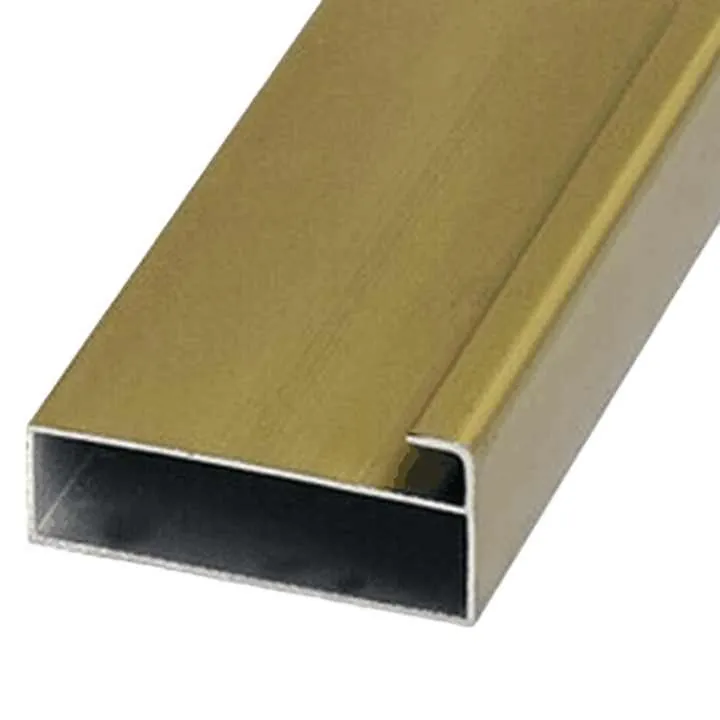
| Custom extrusions | 500 pieces for a new profile | Tooling and setup cost must be spread over 500 units |
| Custom die‑cast | “Low MOQ” claimed, but still 100+ pieces | Die casting demands a mould and fixed cost amortised |
| Prototype/one‑off | One piece sample only | Works when using existing tooling or minimal setup |
Why such variation?
- Tooling and setup cost: For extrusion or die‑cast profiles you may need a new die or mould. That cost must be amortised over a certain volume.
- Material cost and losses: Custom shapes often generate scrap. If you only make a few, cost per piece becomes very high.
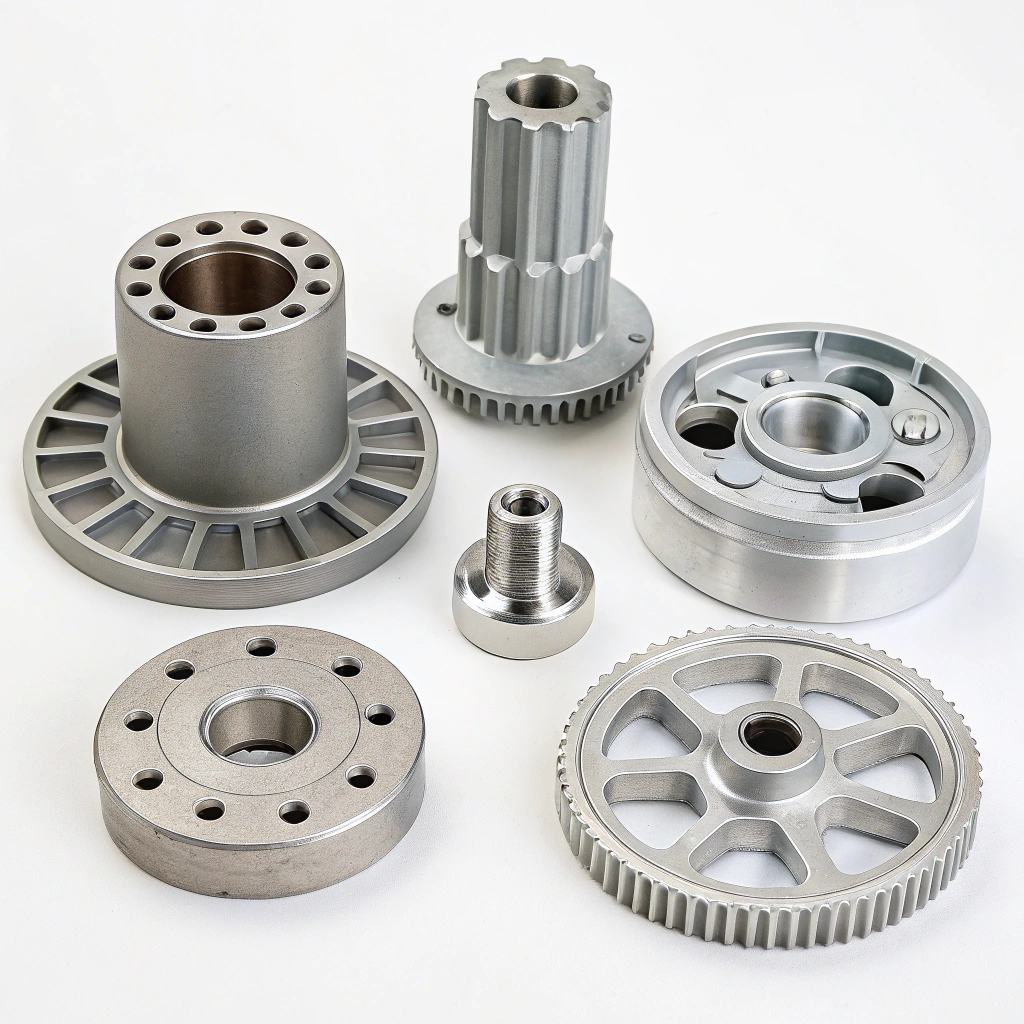
- Process type: CNC machining, stamping, extrusion, die‑cast – each has different economics. Machining is better for low volume, but still involves overhead.
- Finish and specifications: If you need tight tolerances, special alloys (6063, 6061, copper), or exotic finishes, the supplier may require a higher MOQ to make it viable.
If you are just prototyping, you might get away with an MOQ of one or just a few pieces. But for a true production custom profile, expect at least 100 pieces and often 500+ pieces or 500 kg of material. Always ask the supplier: “What is your MOQ for this exact shape, alloy, finish?” Good suppliers will quote clearly.
How do volumes affect unit cost?
Understand how the unit cost drops when volume increases—it can make or break your business margins.
As volume increases, the unit cost falls because setup and tooling costs are amortised across more units, scrap and rework become a smaller percentage, and production becomes more efficient.

When I review pricing with manufacturing teams, we always look at “fixed costs” versus “variable costs”.
Fixed costs vs variable costs
- Fixed costs: tooling, die design, extrusion profile design, fixture setup, first‑offs, QC setup. These costs do not change (much) with each additional unit.
- Variable costs: material (aluminium, copper), labour, finishing, handling, packaging, shipping. These scale with unit count.
Illustration
Let’s say:
- Tooling cost = USD 2,000
- Variable cost per piece = USD 10
- At 100 pieces → cost per unit = (2,000 ÷ 100) + 10 = USD 30
- At 1,000 pieces → cost per unit = (2,000 ÷ 1,000) + 10 = USD 12
You can see how the tooling cost “per unit” drops dramatically as volume rises.
Other volume‑related factors that reduce unit cost
- Better material yield: With more units, scrap can be recouped more easily and operators optimise runs, so waste percentage goes down.
- Process optimisation: At higher volumes, machines ramp up, setups are “paid for”, changeovers are reduced, staff become more proficient.
- Bulk purchase of alloy: Suppliers may purchase large batches of aluminium (6063 or 6061) at lower cost and pass savings to you.
- Negotiation leverage: If you commit to a large volume, you may negotiate tooling cost sharing or lower MOQ terms.
- Prototype premium avoidance: For small volume runs (e.g., MOQ of one), the unit cost may include a “prototype premium”. That means you are paying for inefficiency or special handling.
Practical tip
When you request a quote from a supplier, ask them to show you tiered pricing — for example, 100 pieces versus 500 pieces versus 1,000 pieces. Review how the unit cost drops. This helps you plan: if your forecast only needs 200 pieces, maybe the higher cost is acceptable; if you plan long‑term volume, aim for 500+ pieces to get a better unit cost.
My story
In one case we quoted a custom aluminium extrusion for a lighting manufacturer at Sinoextrud. The MOQ was 300 pieces. The unit cost at 300 pieces was USD 18. When we committed to 1,000 pieces, the unit cost dropped to USD 11. Transitioning from trial to production saved about 40 % unit cost. This difference made the project viable for export to Europe.
Which factors influence MOQ decisions?
MOQ isn’t arbitrary—it’s driven by a set of concrete manufacturing and commercial factors. Knowing these factors gives you better negotiating power.
Key factors influencing MOQ include tooling cost, manufacturing process, material choice, finish complexity, inventory risk, and supplier capacity.

Let’s break down the major factors in more detail.
Tooling and setup
When you design a custom heat sink, you may need: a new extrusion die, die‑casting mould, CNC fixture, or stamping tool. These cost money. The supplier spreads these cost over a minimum number of units. If MOQ is too low, cost per unit becomes too high.
Process type & flexibility
- Extrusion: Good for larger volumes and continuous production runs. Tooling cost is high, but variable cost per unit is lower.
- Die‑casting: Also good for high volume. Tooling cost is even more expensive. MOQ tends to be higher.
- CNC machining: Lower tooling cost, but high cost per unit. Better suited for low volume. Some suppliers accept an MOQ of one for a sample.
- Stamping/fin‑forming: For thin fins and high‑volume lighting, often large tooling and high volume. The MOQ is high.
Material & finishing
If you specify a premium alloy (6061‑T6 versus standard 6063), or copper instead of aluminium, or a special surface treatment (anodise, powder‑coat, wood‑grain), then cost and risk increase. Suppliers may raise MOQ to ensure the run is worth it.
Design complexity and change risk
If your part uses complex shapes, tight tolerances, many machining and finishing steps, or small features, then scrap risk and inspection cost increase. The supplier will ask for more units to amortise risk.
Inventory and supplier risk
For a custom part the supplier may need to source special material, run a unique process, allocate machine time. If your volume is low, they risk leftover inventory or dedicated setups that sit idle. So they protect themselves by setting a higher MOQ.
Lead‑time and production planning
Suppliers may batch smaller orders with other work or schedule less frequently. If MOQ is too low they might run it as a “special job” with higher cost or longer lead time.
Buyer’s contractual commitment
If you commit to a future larger order, the supplier may be more flexible on MOQ for the first run. If you are only asking for a one‑off small batch, the MOQ may be rigid.
When you plan a custom heat sink order, walk through these questions:
- What tooling will we need? Will it be new or reuse existing?
- Which process: extrusion, die‑casting, CNC, stamping?
- What alloy and finish will we use?
- What complexity features? Holes, threads, cut‑outs?
- What is our forecast volume? Can we commit to more than the MOQ to reduce unit cost?
- Is the supplier willing to do a smaller sample run or prototype?
Can MOQs be lowered for prototypes?
When you only need a sample or a small batch, you’ll want the MOQ as low as possible—but is that realistic? Yes, with some conditions.
Many manufacturers allow an MOQ of one piece or a small quantity for prototypes or pre‑production runs—but often at a higher unit cost or with restrictions.

I’ve dealt with prototype runs at Sinoextrud. Here’s how we approached them and what you should ask.
Prototype vs production run
- A prototype is typically 1–10 pieces. The aim is to validate design, fit, thermal performance, finish.
- Full production may be hundreds or thousands of pieces.
Conditions for a lower MOQ
- Use existing tooling: If the design matches an existing profile or tool, supplier may accept 1–10 pieces as MOQ because the setup cost is minimal.
- Pay tooling/setup cost upfront: Sometimes the supplier will ask you to pay tooling cost even for a small MOQ, which effectively raises your unit cost.
- Accept higher unit cost: The supplier may say: “Yes we can run five pieces, but the price per piece is much higher than for 500 pieces.”
- Reduce finish or simplify design: Your prototype may not include full surface treatment, anodising, full batching, etc. You may need to accept a “raw” finish or simpler version.
- Limited warranty or inspection: The supplier may limit support for one‑off parts, or you may inspect and accept risk.
- Commit to future larger volume: If you commit to order more once the prototype is approved, they may reduce the prototype price or MOQ somewhat.
Practical tip
If you are only in the design‑validation stage, ask your supplier: “Can you run a sample or 10 pieces for prototype at this price, knowing we will move to 300 pieces later if approved?” Make sure you clarify the price for the sample, the difference when scaling to production, and whether the tooling/setup cost is included or separate.
Also make sure you understand that the prototype might not reflect the exact production cost or finish—so budget accordingly.
Conclusion
In designing custom heat sinks, understanding MOQ is key. MOQs vary from one piece for samples up to hundreds or even kilograms for production runs. Unit cost drops with higher volume because tooling and fixed costs are spread out. Tooling, process type, material, finish, design complexity, supplier risk—all affect MOQ. And yes, you can often negotiate lower MOQ for prototypes, but expect higher unit cost and simpler conditions.