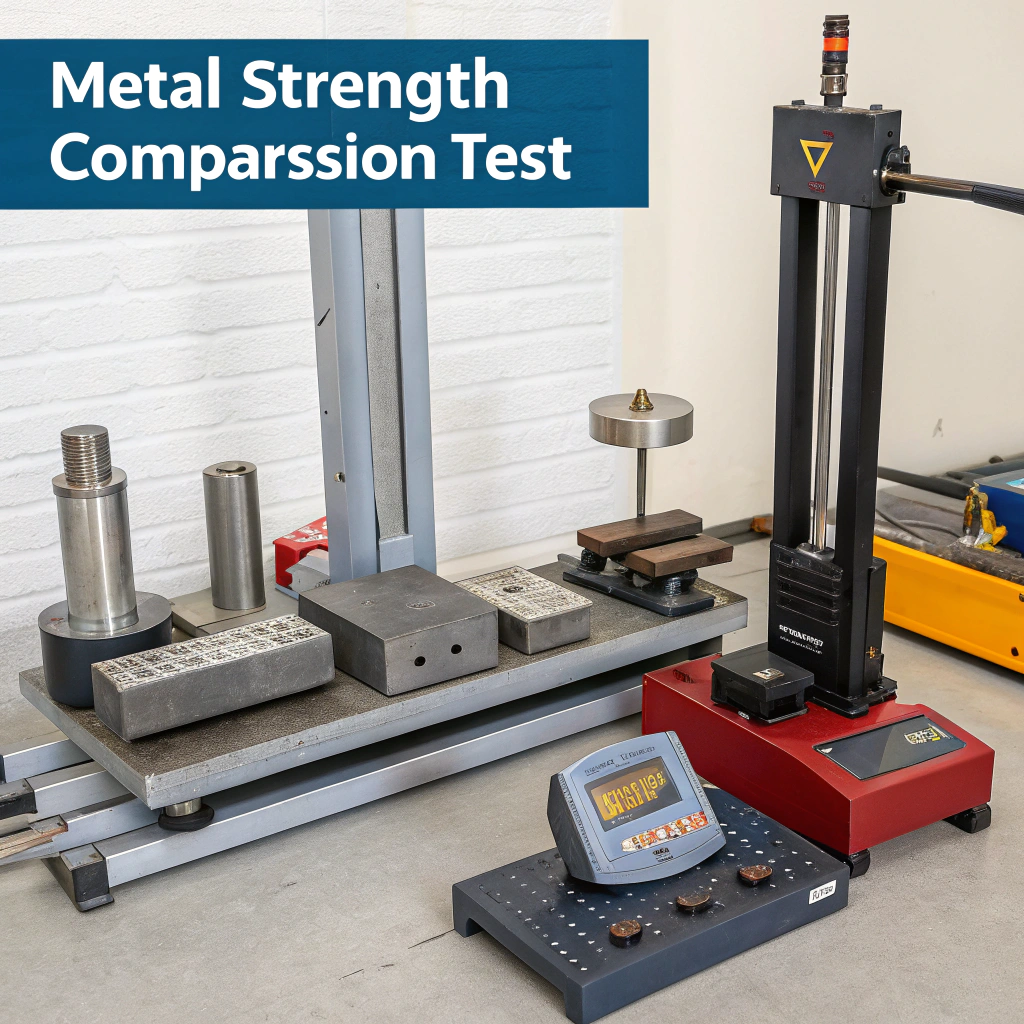
Manufacturers often struggle to select the right metal for a project. Picking the wrong one leads to structural failure, cost overruns, or unhappy clients.
You can compare different metal strengths by examining properties like tensile strength, yield strength, and hardness using standardized tests like Brinell, Rockwell, and tensile testing.
Each metal performs differently under stress. Understanding these strength differences helps avoid costly mistakes and makes sure your project runs smoothly from start to finish.
What Determines the Strength of a Metal?
Metal often looks strong, but appearances can be misleading. You might pick a shiny metal and later find it bends or cracks under pressure.
A metal’s strength depends on its atomic structure, composition, grain size, and heat treatment. Alloys, impurities, and crystal lattice defects also play a major role.

The Role of Atomic Structure
All metals have atoms arranged in a crystalline structure. Some metals, like tungsten, have tightly packed atoms. Others, like aluminum, have more space between atoms. This affects how easily the atoms slide past each other.
Grain Size and Boundaries
Smaller grains usually mean higher strength. Why? Because grain boundaries stop dislocations — defects in the structure — from moving. Finer grains create more boundaries. That blocks movement and makes the metal harder to deform.
Heat Treatment
You can change a metal’s strength by heating and cooling it. This process — called heat treatment — alters the structure inside. For example:
| Heat Treatment | Effect on Metal Strength |
|---|---|
| Annealing | Softens the metal |
| Quenching | Hardens the metal |
| Tempering | Adds toughness after quenching |
Composition and Alloys
Pure metals are usually weaker than alloys. When you add other elements — like carbon in steel — you block the atomic layers from slipping. That increases the strength. Stainless steel, for example, is stronger than pure iron because of added chromium and nickel.
Why Is Metal Strength Important in Manufacturing?
You might think strong metal means better products. But choosing the strongest material isn’t always the right answer. Overdesign leads to waste, high cost, and unnecessary weight.
Metal strength matters because it affects safety, performance, and cost. Choosing the right strength ensures that the product is durable without being over-engineered.

Matching Material to Function
Each product needs different properties. A bicycle frame needs to be light and strong. A structural beam must support weight without bending. Choosing the wrong strength metal in either case could lead to disaster.
Manufacturing Process Compatibility
Stronger metals are harder to cut, weld, or bend. This can slow down production or increase tool wear. Sometimes, a slightly softer metal is better for speed and flexibility.
Cost and Availability
High-strength metals often cost more. Titanium is stronger than aluminum but can be five times more expensive. You have to balance strength against price — especially for large-scale production.
| Metal | Tensile Strength (MPa) | Approx. Cost (per kg) |
|---|---|---|
| Aluminum | 90–570 | $2–$3 |
| Steel | 370–1800 | $0.50–$1.50 |
| Titanium | 900–1200 | $20–$30 |
How to Measure and Analyze Metal Strength?
A metal might look strong, but you can’t tell until you test it. Without data, you’re just guessing — and guessing leads to risk.
To analyze metal strength, we use tests like tensile testing, hardness testing (Brinell, Rockwell), and impact testing. These show how a metal reacts to force, stress, and sudden shock.
Tensile Testing
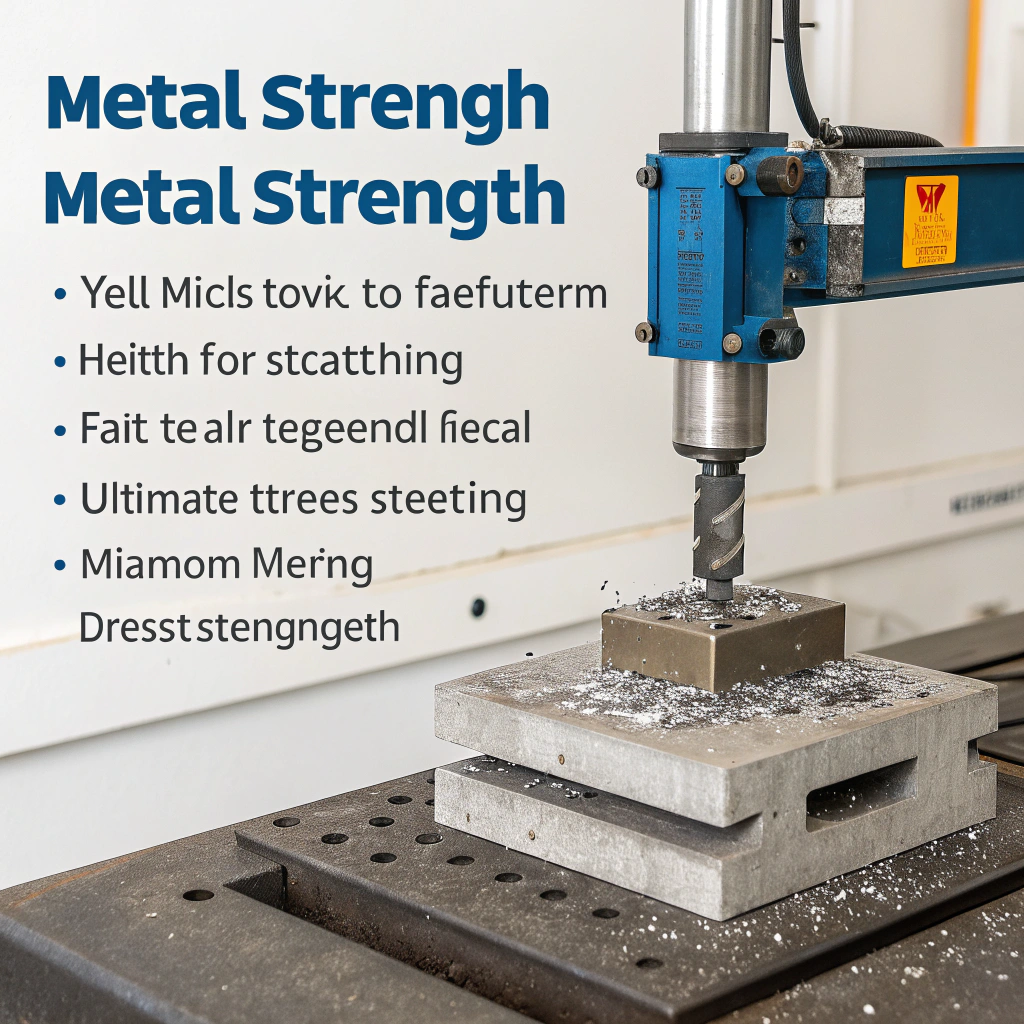
This is the most common test. You pull a metal sample until it breaks. The machine records how much force it took and how far it stretched. Key outputs include:
- Yield Strength: When the metal starts to deform.
- Ultimate Tensile Strength: The maximum stress the metal can take.
- Elongation: How much it stretches before breaking.
Hardness Testing
Hardness tells how resistant a metal is to surface deformation. Three main tests:
- Brinell: Uses a steel or tungsten ball.
- Rockwell: Measures depth of penetration.
- Vickers: Uses a diamond pyramid.
Each test suits different metals and applications. Rockwell is quick and common for steel. Brinell works better for soft metals like aluminum.
Impact Testing
This measures toughness — how a metal handles sudden shocks. A notched sample is struck with a swinging hammer. The test shows how much energy the sample absorbs before breaking.
This is important for parts that face dynamic loads or cold environments, where brittle failure is a risk.
What Innovations Are Emerging in Metal Strength Analysis?
Traditional testing is reliable, but it can be slow, expensive, and destructive. In recent years, newer technologies are changing how we study metal strength.
New innovations include AI-based modeling, microstructure imaging, and non-destructive testing using ultrasonic or X-ray methods. These tools give faster, deeper insights.
AI and Machine Learning
By feeding test data into algorithms, engineers can predict how new alloys will perform. This saves time and reduces the need to physically test every new metal.
For example, an AI model might simulate what happens if you add 3% vanadium to steel. You get predictions without melting, pouring, or testing the metal.
Advanced Imaging
Scanning Electron Microscopes (SEM) and Electron Backscatter Diffraction (EBSD) let you see a metal’s grain structure in fine detail. These show exactly how the metal’s internal structure affects strength.
By comparing images before and after stress, you can see where the cracks begin. This helps design better alloys from the inside out.
Non-Destructive Testing (NDT)
You don’t always want to break something just to test it. NDT methods include:
- Ultrasonic Testing: Sends sound waves into the metal. Echoes reveal cracks or voids.
- X-ray Testing: Looks inside the metal like a medical X-ray.
- Magnetic Particle Testing: Finds surface and near-surface defects in ferromagnetic metals.
These methods are fast, clean, and ideal for checking every unit in a batch — not just a sample.
Conclusion
Comparing metal strength is more than looking at numbers. It’s about matching the right property to the right application. By understanding what controls strength and how we measure it, we make better decisions in design, production, and quality control.