Sometimes, a standard machine just can’t keep up with the complexity of a part. That’s when manufacturers turn to a 4-axis CNC machine.
A 4-axis CNC machine adds a rotating axis to the standard 3-axis setup, allowing more complex, precise, and efficient machining without manual repositioning.
This added capability makes a big difference when producing components with curves, angles, or multiple faces. Let’s explore how it works and where it matters most.
How does a 4-axis CNC machine work?
When 3-axis isn’t enough, but 5-axis is too much, 4-axis steps in as the right tool for the job.
A 4-axis CNC machine works by adding an additional rotary axis (usually the A-axis) to the traditional X, Y, and Z axes. This allows the workpiece to rotate, enabling machining on multiple faces without changing its position manually.
In a typical 3-axis CNC, the tool moves left-right (X), forward-back (Y), and up-down (Z). The workpiece stays still. But with 4-axis, the rotary axis allows the workpiece itself to rotate. This rotation opens up more complex geometries to be cut in a single setup.
Example of 4-axis movement:
| Axis | Direction | Function |
|---|---|---|
| X | Left to Right | Moves tool across part width |
| Y | Front to Back | Moves tool along part depth |
| Z | Up and Down | Controls cutting depth |
| A | Rotational (around X) | Rotates part for angled cuts or multiple faces |
By combining these movements, the machine can reach areas that a 3-axis setup cannot, without having to stop and reposition the material.
This extra axis improves workflow, reduces setup time, and leads to higher consistency across batches. It also reduces the chance of error since the part stays clamped throughout.
Most 4-axis CNC machines are either vertical machining centers (VMCs) with a rotary table, or horizontal machining centers (HMCs) with an integrated rotating fixture.
Why choose 4-axis over traditional 3-axis?
Trying to machine complex parts on a 3-axis system often leads to delays, errors, and frustration.
Choosing a 4-axis CNC machine gives manufacturers better accuracy, faster processing, and reduced manual intervention when compared to 3-axis machines.
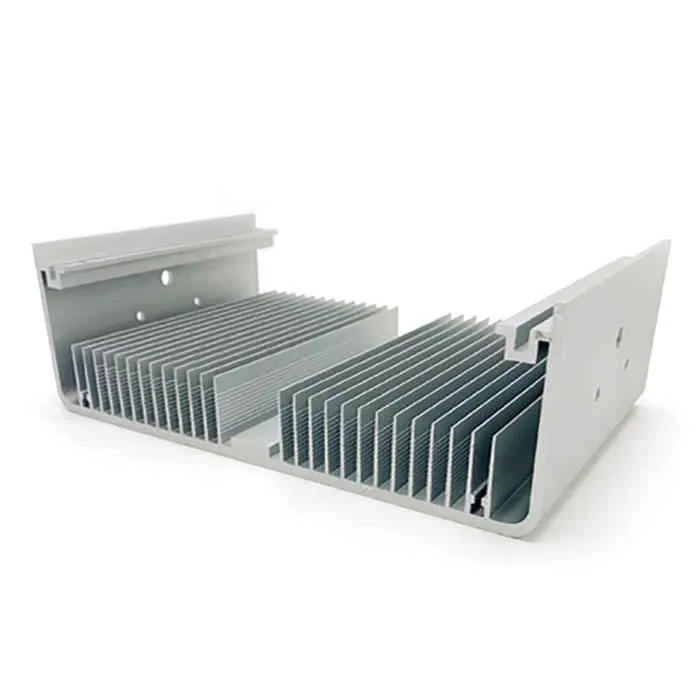
A 3-axis machine requires manual repositioning of the part to reach different sides. This process increases the chance of misalignment. Each time the part is moved, accuracy suffers.
4-axis machines solve this by rotating the part automatically. This ensures every face is machined precisely without needing to unclamp or touch the workpiece.
Comparison Table: 3-axis vs. 4-axis
| Feature | 3-axis CNC | 4-axis CNC |
|---|---|---|
| Machining sides | One side per setup | Multiple sides per setup |
| Setup time | Longer (manual rotation) | Shorter (automated rotation) |
| Accuracy | Moderate | High |
| Cost | Lower upfront | Higher but more efficient |
| Complexity | Limited geometry | Can handle angled and curved features |
Besides saving time, 4-axis also opens the door to better surface finish and part symmetry, especially for components that need multiple contours or rounded shapes.
It's a popular upgrade path for workshops that outgrow their 3-axis machines but don’t yet need a full 5-axis system.
Which operations need 4-axis motion?
Some cutting tasks are simply not possible—or not efficient—using only three axes.
Operations like rotary engraving, cylindrical cutting, gear shaping, and multi-face contouring require 4-axis motion for precision and efficiency.
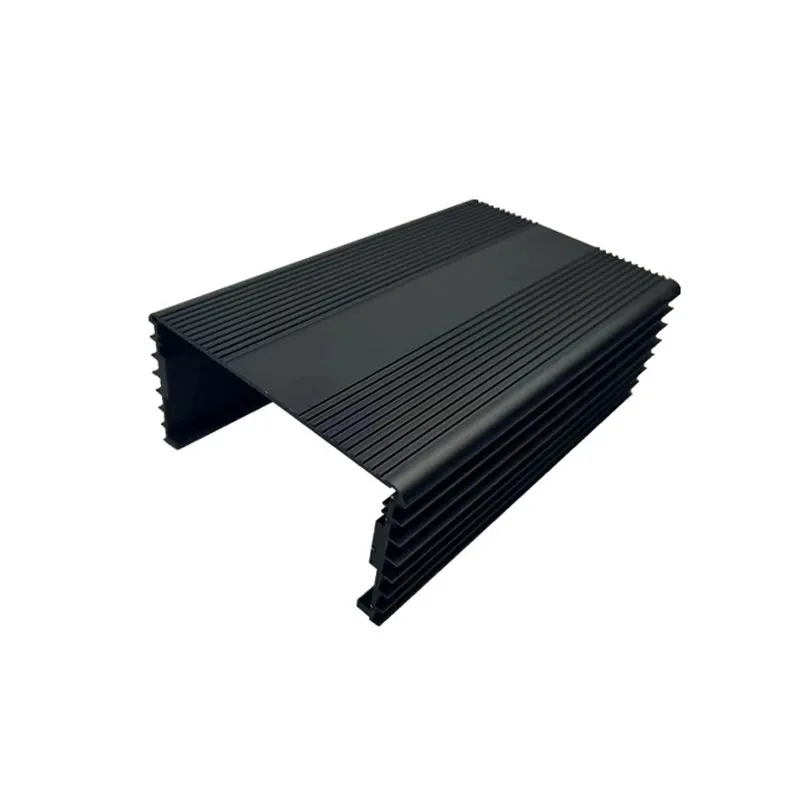
Let’s break down some common processes where 4-axis is essential.
Key Machining Operations Requiring 4-Axis:
1. Rotary Engraving
When engraving text or patterns around a cylinder, rotation is essential. The A-axis lets the part turn while the tool remains steady, ensuring even engraving around the shape.
2. Hole Drilling at Angles
Many industrial parts need holes drilled on angled faces. With a 4-axis machine, the part can be rotated so the tool drills perpendicular to the surface, keeping the hole clean and accurate.
3. Gear Machining
Producing gears and splines requires coordinated motion between rotation and cutting. A 4-axis CNC can rotate the blank while the tool cuts the tooth profile accurately.
4. Complex Contouring
Parts with helical grooves, angled pockets, or twisted surfaces benefit from 4-axis machining. These surfaces are hard to achieve with flat X/Y/Z movement alone.
5. Multi-Face Milling
When multiple sides of a cube or rectangular block need machining, the A-axis rotates the part to expose each side without removing it from the clamp.
Each of these tasks becomes faster, more consistent, and more accurate with 4-axis capability. For companies making parts in bulk, this repeatability is a major advantage.
Where is 4-axis machining commonly applied?
Not every industry needs 4-axis machining—but those that do depend on it heavily.
4-axis CNC machining is commonly used in aerospace, automotive, medical devices, oil & gas, and custom manufacturing where precision and efficiency matter most.
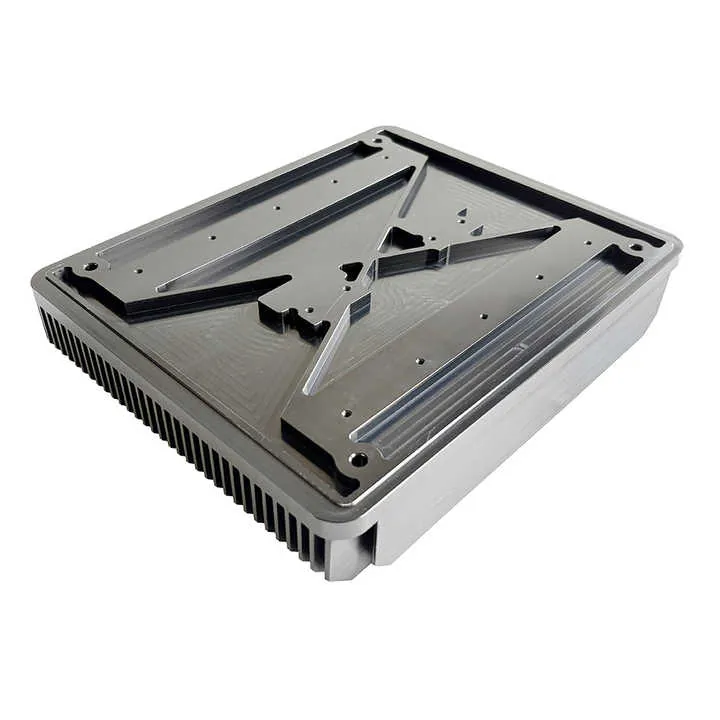
Here’s a look at how 4-axis is used across industries:
Aerospace
Aircraft parts often have curved shapes, angled surfaces, and strict tolerance requirements. Components like turbine blades, brackets, and airframe connectors are machined more efficiently with 4-axis tools.
Automotive
Many auto parts need holes at different angles or machining on multiple sides. Engine components, transmission housings, and custom wheel hubs benefit from reduced setup and higher repeatability.
Medical
Precision is critical in the medical field. Devices like surgical instruments or orthopedic implants often involve 3D contours or rounded profiles that a 4-axis machine handles well.
Oil & Gas
In this sector, cylindrical parts such as valve bodies, pipe fittings, or threaded connectors need accurate machining. The 4-axis setup allows these parts to be rotated and milled in a single setup.
General Manufacturing
For factories producing a variety of parts, a 4-axis machine adds flexibility. It helps reduce bottlenecks, shortens production time, and improves part finish without needing constant adjustments.
Custom & Prototype Work
Rapid prototyping often involves unique geometries. 4-axis machines let engineers test and build new shapes faster and with fewer setup changes.
Adding 4-axis capability is not only about complexity—it’s also about consistency and speed. Any industry that values those things can benefit from this upgrade.
Conclusion
A 4-axis CNC machine opens up more possibilities for precision, speed, and complexity in machining. It bridges the gap between basic 3-axis and high-end 5-axis systems, offering flexibility without overwhelming cost or complexity.