
Modern manufacturers often struggle to find precise, efficient, and repeatable solutions for making very small, complex parts. Traditional methods fall short—especially in high-volume production.
CNC Swiss machining is a high-precision, automated manufacturing process ideal for producing small, intricate parts with tight tolerances.
Unlike standard turning machines, Swiss machines hold the workpiece tightly and support it very close to the cutting tool. This ensures ultra-precision and stability for complex operations.
How does Swiss machining provide accuracy?
Small parts are hard to hold in place, and even harder to cut precisely. A slight vibration or thermal change can ruin the whole process.
Swiss machining delivers accuracy by using a sliding headstock and guide bushing system that minimizes part deflection during machining.
Swiss machines are different because of how they support the material. The bar stock is fed through a guide bushing, which stays close to the cutting tool. This setup keeps the part steady. It also allows longer, thinner parts to be machined without bending or vibrating.
Key Features That Ensure Accuracy
| Feature | Description |
|---|---|
| Sliding Headstock | Moves material instead of tool, keeping cut point constant |
| Guide Bushing | Provides near-cut support to prevent deflection |
| Multi-Axis Tools | Cuts multiple sides in one cycle with no repositioning |
Thermal Stability
Temperature changes during machining can expand or contract metals. Swiss machines often operate in climate-controlled environments. They also use advanced cooling systems. This helps keep every cut consistent, even during long runs.
Real-Time Monitoring
Modern Swiss CNC machines have sensors and software that monitor tool wear, speed, and position. If anything shifts slightly, the system adjusts instantly. That means fewer errors, less scrap, and higher precision.
Why pick Swiss machining for small parts?
Making tiny parts with tiny details is a big challenge. Regular lathes or mills often can't hold or cut these parts well. Results vary too much. Rejections go up.
Swiss machining is perfect for small parts because it offers stability, tight tolerance control, and multi-operation cutting in one setup.
Swiss machines can cut parts as small as a sewing needle, often with features less than 0.1 mm wide. That’s nearly impossible for standard machines. The process also supports high-speed machining, which means faster output without losing quality.
Key Advantages for Small Parts
- Less Setup Time: Multi-tool turrets allow multiple operations without moving the part.
- Better Surface Finish: Constant material support means smoother cuts.
- Less Scrap: Precision cutting means fewer rejected parts.
Examples of Small Parts Made With Swiss Machines
| Part Type | Industry | Size Range |
|---|---|---|
| Bone Screws | Medical | 1 mm – 5 mm |
| Connectors | Electronics | 2 mm – 10 mm |
| Fuel Injectors | Automotive | 3 mm – 8 mm |
Swiss machines also reduce handling time. Since the part is completed in one go, there’s no need to transfer it to another machine. This saves time and cuts down errors.
Which components need Swiss machining?
Some parts must meet very tight tolerances. Some must be made from tough metals like titanium or stainless steel. Others are just too delicate for regular methods.
Components that need Swiss machining are usually small, cylindrical, and high-precision—like pins, shafts, and fittings used in medical, aerospace, and automotive systems.
Swiss machining is used when the part’s function depends on accuracy. In medical devices, for example, a small screw must fit perfectly into bone without slipping. In aerospace, a single misfit pin could cause failure in the system.
Common Components That Require Swiss Machining
- Medical implants: bone screws, dental posts, eye surgery tools
- Aerospace parts: nozzles, shafts, hydraulic valve seats
- Electronics: micro connectors, RF cable pins, optical fiber parts
- Watchmaking: gears, balance shafts, pins
- Automotive: fuel system components, engine pins
Tight Tolerance Requirements
In many industries, tolerances can be as tight as ±0.001 mm. Swiss machines are built for that level of precision. And they maintain it during long production runs, which is critical for industries where parts must be 100% reliable.
Where is Swiss machining widely used?
Some industries demand parts that are not just small, but perfect. The cost of failure is too high. This is where Swiss machining fits best.
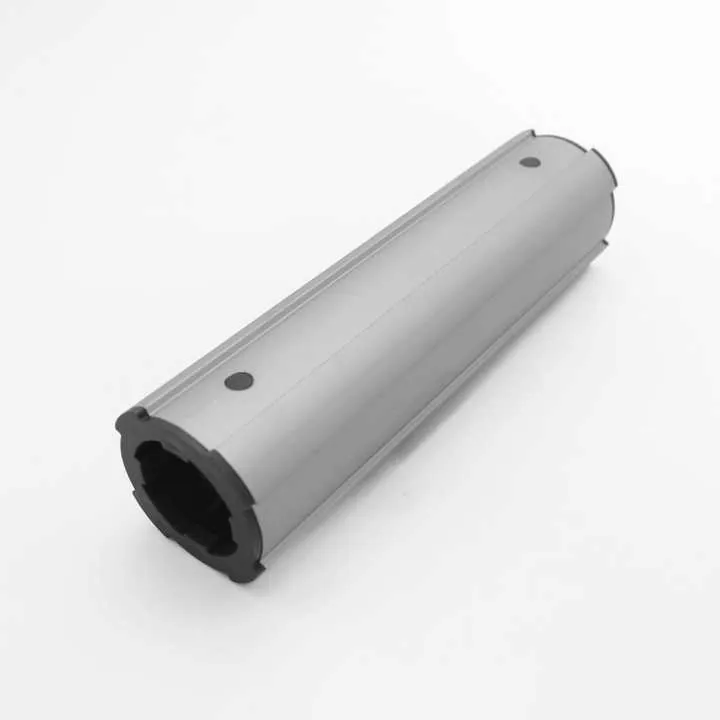
Swiss machining is widely used in the medical, aerospace, electronics, and automotive industries, where tiny high-precision parts are critical.
Industry Use Cases
Medical Industry
Surgeries require precise tools and implants. Swiss machining is used to make:
- Bone screws
- Catheter tips
- Orthopedic tools
These parts must be sterile, biocompatible, and 100% consistent.
Aerospace Industry
Airplanes and rockets rely on perfect parts. Even the smallest flaw can lead to failure. Swiss machining makes:
- Valve seats
- Control pins
- Fuel connectors
Electronics Industry
Devices are getting smaller. Connectors and pins must still be strong and conduct power reliably. Swiss machining delivers tight spacing and clean edges needed for:
- Micro connectors
- Fiber optic terminals
- RF pins
Automotive Industry
Engines need many small precision parts. These must endure high heat, vibration, and pressure. Swiss machines make:
- Fuel injector parts
- ABS valve components
- Transmission pins
Summary Table of Swiss Machining Applications
| Industry | Examples | Importance |
|---|---|---|
| Medical | Implants, tools | Safety, biocompatibility |
| Aerospace | Valve pins, nozzles | Performance, failure risk |
| Electronics | RF pins, connectors | Size, precision |
| Automotive | Engine parts, sensors | Heat resistance, consistency |
Conclusion
Swiss CNC machining is not just a trend—it’s a necessity for industries that rely on ultra-precision, small-scale, and reliable parts. Its unique ability to cut small components with consistency makes it an essential tool for modern manufacturing.





