Machining a part that needs symmetry, speed, and accuracy? Traditional lathes won’t cut it anymore. That’s where CNC turning centers come in.
A CNC turning center is a computer-controlled machine tool used to rotate workpieces while cutting tools remove material, making it ideal for producing round or cylindrical parts with high precision.
These machines are faster, more accurate, and more versatile than manual lathes. Let’s break down how they work and why they’ve become essential in modern manufacturing.
How does a CNC turning center operate?
Most people think of cutting tools moving, not the material. CNC turning centers flip that concept.
CNC turning centers operate by rotating the workpiece at high speed while stationary tools cut, drill, or shape it, all controlled by a programmed software system.
At the core, the workpiece is clamped in a chuck and spun rapidly. The tool doesn't move in a circle—the part does. This method produces perfectly round parts and symmetrical features.
Key Components
Let’s look at what makes up a typical CNC turning center:
| Component | Function |
|---|---|
| Spindle | Holds and rotates the workpiece |
| Chuck | Grips the part tightly during rotation |
| Tool turret | Holds multiple tools for different operations |
| Tailstock | Supports longer parts during machining |
| Control panel | Interfaces with the CNC software |
Unlike traditional lathes, CNC turning centers often have live tooling, meaning they can perform milling, drilling, and tapping without removing the part from the machine. This reduces handling and increases accuracy.
Axes of Movement
Most turning centers work on two primary axes:
- Z-axis: Moves the tool forward and back (toward the spindle)
- X-axis: Moves the tool left and right (across the part diameter)
Advanced machines may also include:
- Y-axis: For off-center milling or drilling
- C-axis: Rotational positioning for milling or tapping operations
The CNC Workflow
- A CAD file defines the part shape.
- CAM software converts it into G-code instructions.
- The CNC system executes the program, coordinating spindle speed, tool changes, feed rates, and depth of cut.
- Sensors monitor the process and adjust automatically if needed.
This automation allows for incredible consistency across hundreds or thousands of identical parts.
Why is CNC turning important for metalworking?
Manual turning is slow, inconsistent, and risky. CNC turning changes that completely.
CNC turning is vital for metalworking because it ensures speed, accuracy, and repeatability in producing round components, especially in industries that demand high volumes or tight tolerances.
Speed and Repeatability
Metalworking involves hard materials like aluminum, steel, or titanium. CNC turning centers maintain consistent performance regardless of material hardness.
- Faster cycle times: With high RPM spindles and automatic tool changers
- Repeatable results: Every part comes out identical, down to microns
- Unattended operation: Machines can run overnight, saving labor
Tight Tolerances
Some industries demand parts with tolerances of ±0.005 mm. Manual machining cannot deliver this reliably. CNC turning centers can, thanks to:
- High-precision tool positioning
- Rigidity to handle vibrations
- Real-time feedback systems
| Capability | Manual Lathe | CNC Turning Center |
|---|---|---|
| Repeatability | Low | High |
| Cycle time | Long | Short |
| Operator skill needed | High | Medium |
| Part complexity | Simple | Complex + Multifaceted |
Surface Finish Quality
Smooth finishes are crucial in aerospace, medical, and automotive parts. CNC turning centers optimize speed, tool path, and feed rate for ideal surface quality, reducing the need for secondary finishing processes.
Complex Parts, One Setup
Many CNC turning centers combine milling and turning. This means fewer setups, lower chance of error, and faster delivery times.
CNC turning isn’t just efficient—it’s foundational to any serious metal fabrication operation.
Which tasks require CNC turning centers?
Whenever a part needs to be round, smooth, or complex in shape, CNC turning is likely involved.
Tasks that require CNC turning centers include manufacturing shafts, bushings, pulleys, bearings, fasteners, pipe fittings, and other symmetrical metal parts.
Commonly Machined Items
Here are typical parts made using CNC turning:
| Part Name | Description |
|---|---|
| Shafts | Used in engines, gearboxes, motors |
| Bearings | Precision metal rings with tight tolerances |
| Bushings | Metal sleeves for mechanical movement |
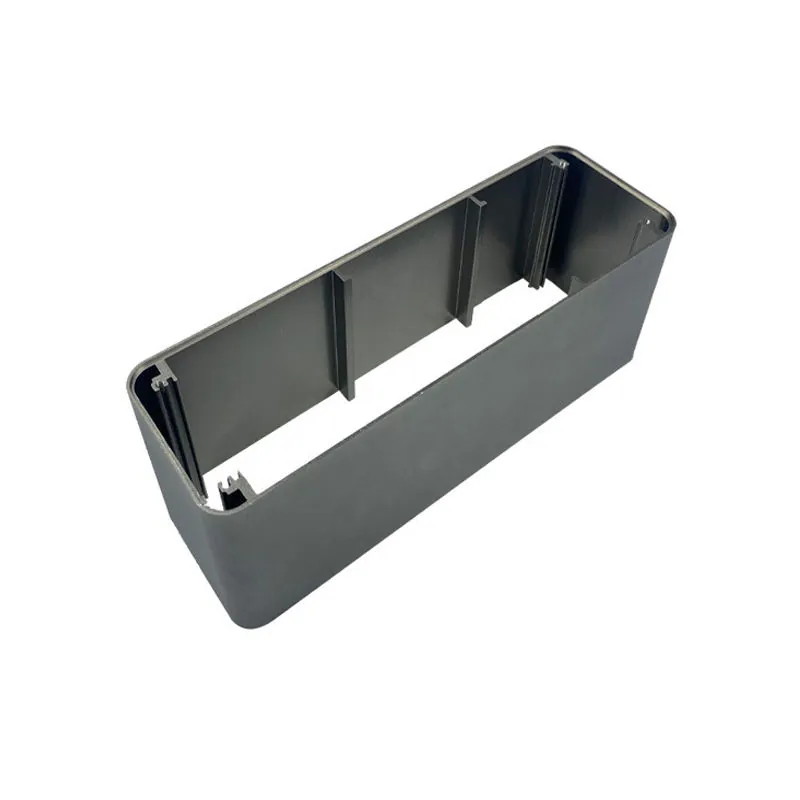
| Housings | Enclosures for electrical or mechanical parts |
| Fittings | Plumbing or fluid flow components |
Specialized Applications
- Threads and Grooves: CNC turning centers easily create internal and external threads or grooves for seals.
- Tapered Cuts: Useful in making conical shapes for specific mechanical needs.
- Drilled or Bored Holes: Live tooling allows for axial and radial holes.
- Face Grooving: Tooling cuts features on the front face of the part, ideal for flanges.
Volume Production
CNC turning centers are ideal for high-volume production. Once the machine is set up and the program loaded, it can produce thousands of parts with minimal supervision.
- Batch runs: Produce 500–10,000+ identical parts
- Multi-bar feeders: Automatically load new material rods
- Tool life monitoring: Ensures consistent quality
In sum, any round or cylindrical part, no matter the complexity or volume, can be efficiently made on a CNC turning center.
Where are CNC turning centers used?
These machines are everywhere—from global aerospace factories to small precision workshops.
CNC turning centers are used in aerospace, automotive, electronics, medical devices, heavy equipment, oil and gas, and any industry requiring precision round parts.
Global Industry Usage
| Industry | Application Examples |
|---|---|
| Aerospace | Shafts, landing gear parts, engine components |
| Automotive | Axles, brake drums, gear blanks |
| Electronics | Connectors, sensor housings |
| Medical Devices | Surgical tools, bone screws, implants |
| Oil & Gas | Valve components, drilling tools, pipe couplings |
| General Industry | Rollers, fasteners, shafts, custom fittings |
In Small and Medium Shops
Not just for huge companies—CNC turning centers also serve:
- Prototype shops: Quick development of cylindrical test parts
- Job shops: Flexible machines for contract machining
- Tool rooms: Making components for internal use
In High-End Facilities
Larger operations use multi-axis, dual-spindle turning centers with robotic part loading to maintain 24/7 production.
These advanced machines cut down lead time and eliminate secondary operations like deburring or transferring parts to milling machines.
Region-Specific Adoption
| Region | Key Usage Areas |
|---|---|
| North America | Aerospace and military-grade components |
| Europe | High-end automotive and medical industries |
| Asia | Consumer electronics, telecom, precision tools |
| Middle East | Oil and gas machining, industrial valves |
Whether it's mass production or one-off parts, CNC turning centers offer unmatched efficiency and flexibility.
Conclusion
A CNC turning center is a powerful machine that brings speed, accuracy, and automation to the production of round and cylindrical parts. From simple bushings to complex aerospace shafts, it ensures every cut is perfect, every time.