When precision is non-negotiable—whether for aerospace, medical, or industrial parts—only one process consistently delivers the tolerances and surface finish required.
Precision CNC machining is the use of advanced computer-controlled equipment to remove material from a workpiece with extremely high accuracy, producing parts that meet tight tolerances and strict quality standards.
This method ensures parts are reliable, repeatable, and ready for use in critical applications.
Let’s look at what this process involves, its main advantages, how it’s used in production, and the technologies shaping its future.
What is precision CNC machining?

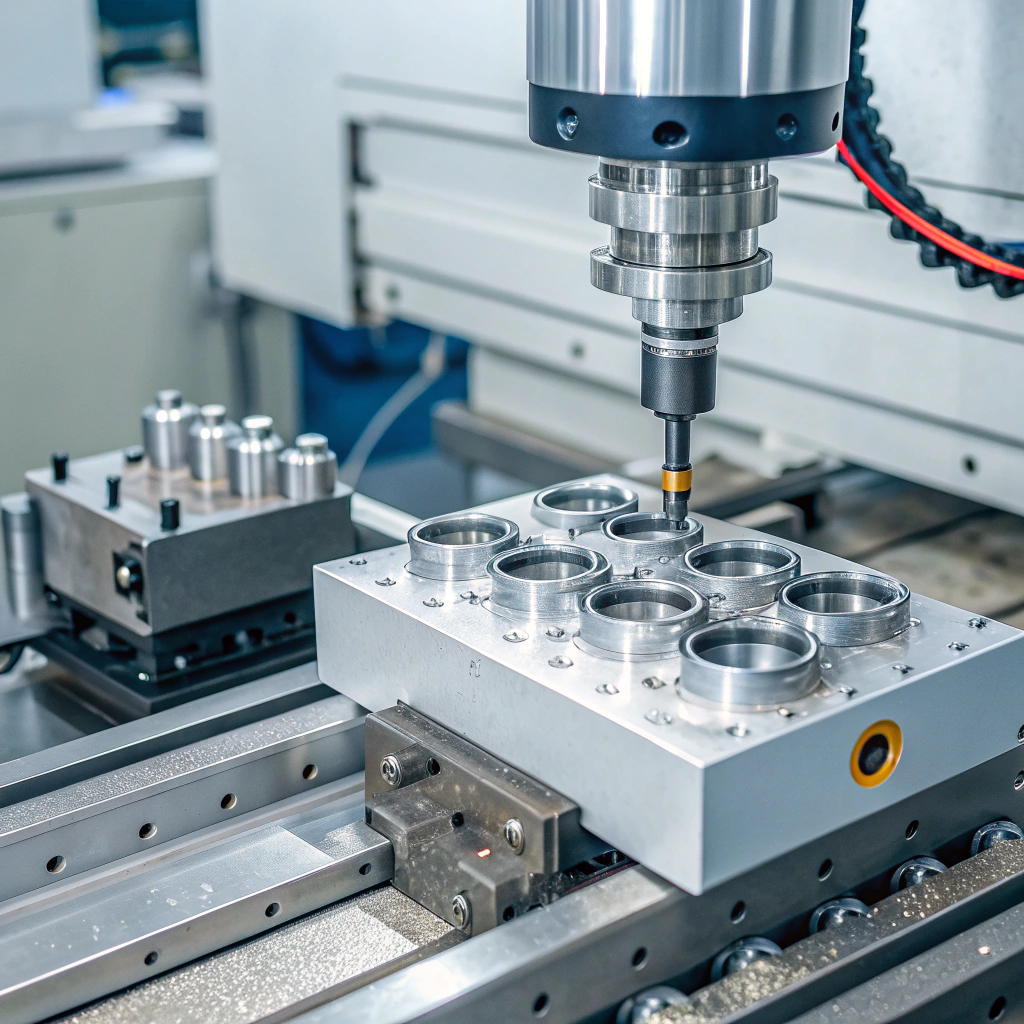
Precision CNC machining is a subtractive manufacturing process where machines like CNC mills, lathes, and turning centers are used to create highly accurate parts. These machines follow exact digital instructions to shape metal, plastic, or composite materials to tolerances often as tight as ±0.001 inches or 0.025 mm.
Unlike standard machining, precision machining focuses on both dimensional accuracy and surface finish. It’s used when parts need to work flawlessly in demanding environments—like aerospace components, surgical instruments, high-end automotive parts, and custom tooling.
Characteristics of precision CNC machining:
| Feature | Description |
|---|---|
| Tight tolerances | Commonly within ±0.01 mm; sometimes tighter |
| Smooth surface finish | Often Ra < 1.6 μm; achievable below Ra 0.4 μm |
| Consistent quality | Ideal for repeatable runs with zero deviation |
| High material control | Supports aluminum, stainless steel, titanium, etc. |
| Complex geometry | Multi-axis machines handle detailed shapes and holes |
It’s not just about machinery—it’s about how you set it up, monitor it, and validate the outcome.
What are the advantages of precision CNC machining?

Precision CNC machining delivers unparalleled accuracy, consistency, and quality—especially for industries where failure is not an option.
This process offers several clear advantages, especially for manufacturers who deal with complex or high-stakes components.
Benefits overview:
| Advantage | What it means |
|---|---|
| Exceptional accuracy | Enables precise hole sizes, fits, and alignments |
| High repeatability | Ensures all parts in a batch meet the same standard |
| Better surface finish | Reduces need for polishing or grinding post-machining |
| Compatibility with CAD | Digital files feed directly into CAM software |
| Wide material selection | Works with soft and hard metals, plastics, composites |
| Less human error | Automated control minimizes operator mistakes |
| Ideal for critical parts | Supports aerospace, medical, and defense standards |
These advantages make it easier to win jobs in competitive sectors and maintain long-term customer trust.
How to apply precision CNC machining in production?
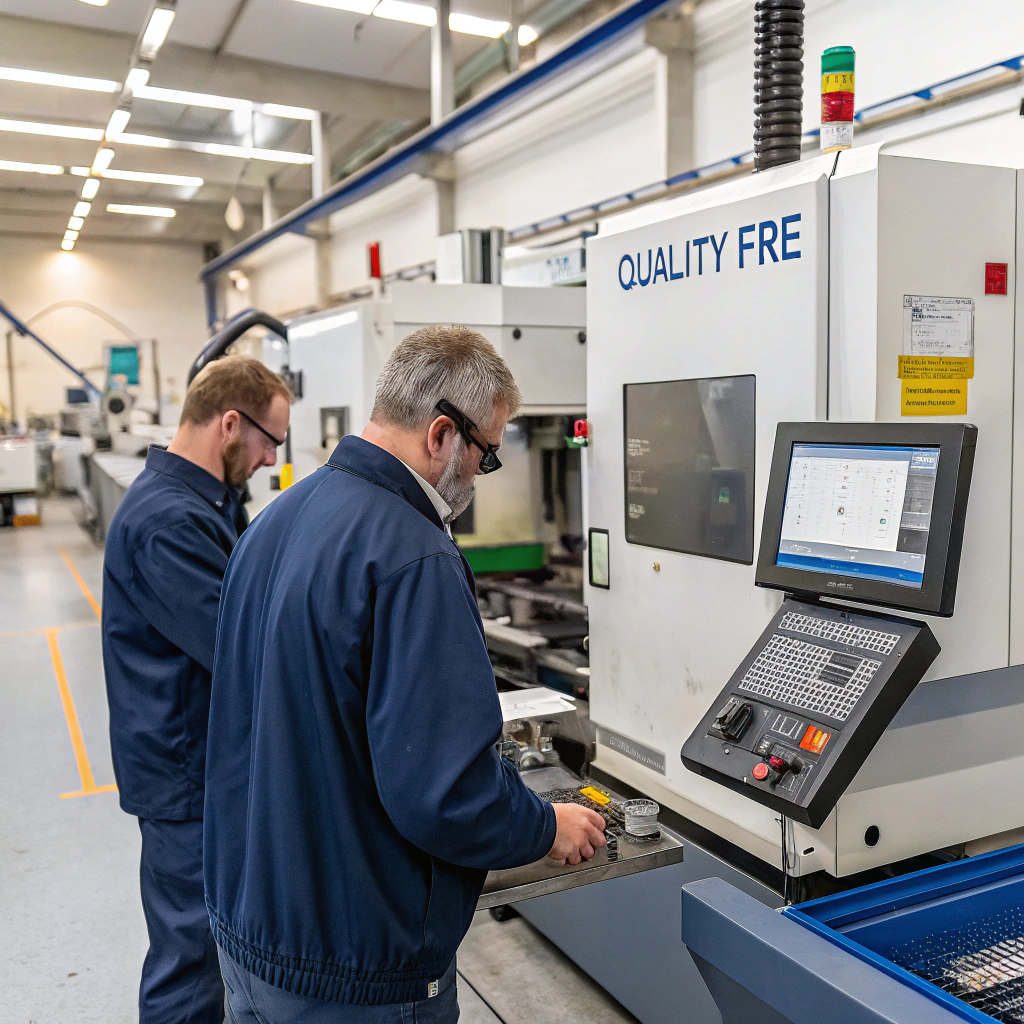
To get consistent, high-quality results, applying precision CNC machining in production requires careful planning, process control, and quality assurance. Here’s how I approach it:
Step 1: Understand the specifications
Start by reviewing technical drawings and 3D models. What are the tolerances? Which surfaces are critical? Are there surface finish or concentricity requirements?
Step 2: Select suitable machines and tools
Choose CNC equipment capable of delivering the required precision. For tight tolerances, machines with high spindle stability, minimal backlash, and temperature compensation are essential. Choose sharp, low-runout tools, and use holders with vibration damping.
Step 3: Program with care
In your CAM software, set tool paths that reduce cutting pressure and vibration. Use multiple light finishing passes instead of one aggressive cut. Simulate the tool path to catch errors early.
Step 4: Set up correct workholding
Use precision vices, soft jaws, or custom fixtures to hold parts securely without distortion. Even minor movement can throw off your tolerances.
Step 5: Monitor key parameters
Use machine probes to verify part positions. Track tool wear. Keep coolant systems clean and consistent. Monitor cutting temperatures, especially in hard metals.
Step 6: Inspect with precision tools
Use calipers, micrometers, CMMs, and surface roughness testers. Check key dimensions and features, and document them for traceability.
Step 7: Refine and standardize
Once the process works for one part, lock in parameters, tooling, and setup instructions. Create a repeatable, documented process.
Step 8: Scale up with confidence
For batch production, automate setups with tool changers and part loaders. Use statistical process control (SPC) to monitor variation over time and catch drift early.
Typical production process table:
| Stage | Description |
|---|---|
| Design analysis | Read drawings, understand key specs |
| Machine selection | Choose CNC machines and tools based on precision need |
| CAM programming | Generate accurate tool paths with finishing passes |
| Setup & fixturing | Secure part for consistent cuts |
| Machining | Run jobs, monitor tool life and stability |
| Quality check | Inspect parts using precision instruments |
| Feedback loop | Adjust programs or setups as needed |
| Production scale | Use automation to maintain output and consistency |
In my own production, applying this structure has reduced scrap, improved surface quality, and impressed clients—especially those with aerospace and optical parts.
What are the trends in precision machining technologies?
Precision machining is evolving with smarter machines, better materials, and tighter process control—all aimed at boosting quality, speed, and reliability.
Here are some of the top trends reshaping how we do precision CNC machining:
1. Multi-axis machining
5-axis and even 9-axis machines allow cutting on multiple faces in one setup. This reduces part movement, minimizes human error, and improves overall accuracy.
2. In-machine metrology
Built-in probes and sensors allow for real-time measurement, enabling machines to auto-correct tool paths or halt operations when tolerances drift.
3. AI-powered tool path optimization
CAM software now uses artificial intelligence to improve tool engagement, reduce air cuts, and dynamically adjust feed rates—all to maintain precision while speeding up cycle times.
4. Thermal compensation systems
New machines include sensors that monitor spindle and axis temperatures and adjust operations automatically to account for thermal expansion, helping to maintain micrometer-level accuracy.
5. Micromachining tools
As components get smaller, micromachining tools and high-speed spindles enable precision cutting of features under 0.5 mm. This is essential in medical, electronics, and watchmaking industries.
6. Material advancement
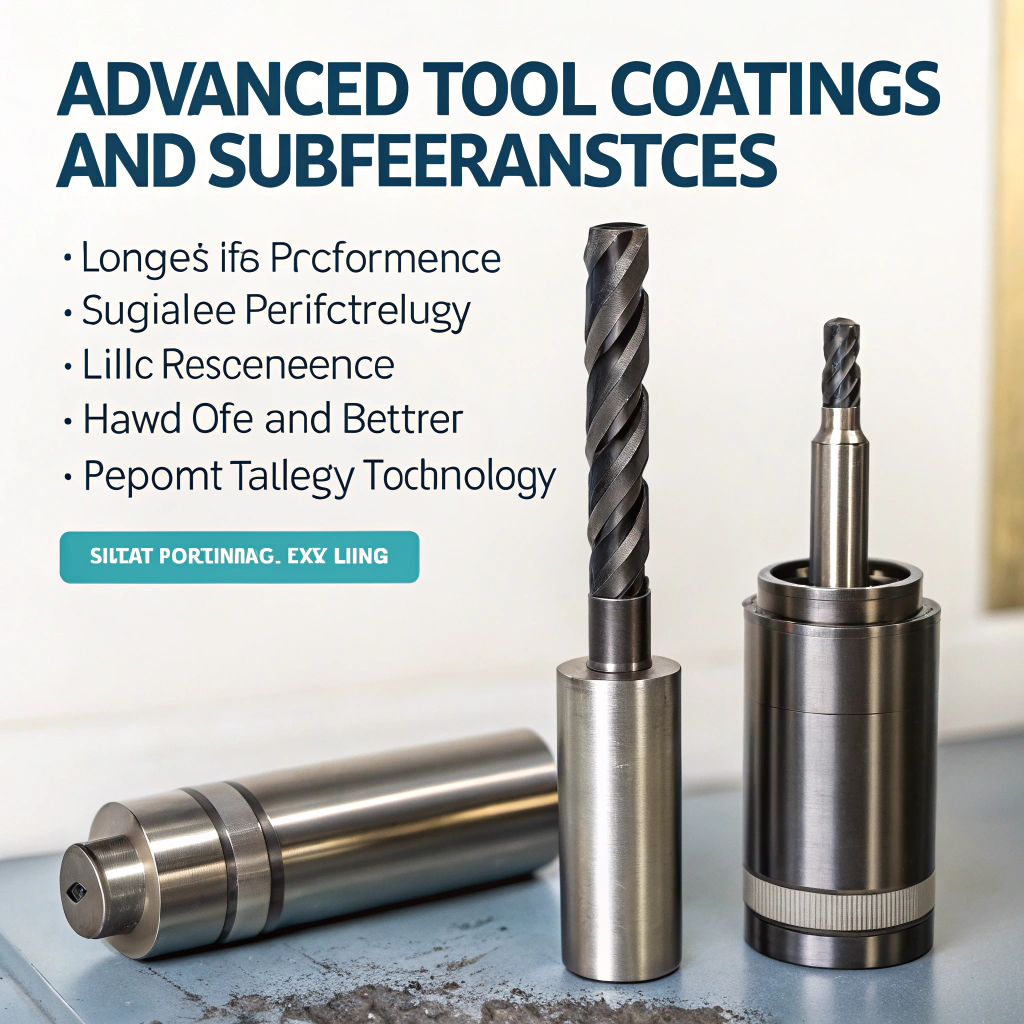
Tool coatings and substrates are advancing rapidly—allowing longer tool life, faster speeds, and better surface finishes even in hard materials like titanium or Inconel.
7. Automation and lights-out machining
More shops are adding robotic arms, pallet systems, and unattended operation setups to run high-precision parts 24/7 with minimal operator intervention.
8. Sustainable practices
Reducing coolant waste, using recyclable materials, and optimizing toolpaths to minimize energy usage are becoming more common in precision environments.
Precision technology trends summary:
| Trend | Impact on Precision CNC |
|---|---|
| 5-axis & multi-axis setups | More complex parts in fewer setups |
| Smart probing & inspection | Real-time quality control |
| AI & adaptive CAM software | Better surface finish and shorter cycle |
| Thermal compensation | Micron-level accuracy across long runs |
| Miniature tooling | Machining of micro-parts and tiny features |
| Better tooling materials | Faster machining of exotic materials |
| Automation integration | More output with less operator input |
| Eco-conscious machining | Lower cost and reduced environmental impact |
For manufacturers like me, staying ahead of these trends means being able to offer better results in less time—especially important when serving clients with high-stakes requirements.
Conclusion
Precision CNC machining isn’t just a manufacturing method—it’s a quality promise. It ensures every part you produce meets strict specifications, looks professional, and performs flawlessly. As machines get smarter and software more adaptive, achieving precision is becoming faster and more scalable. The future of machining belongs to those who invest in accuracy and process control today.