Many manufacturing tasks demand complex shapes and perfect precision — but simple CNC machines often fail, or require many re‑setups and manual work. The result: wasted time, uneven quality, high costs.
The best 5‑axis CNC machines solve that by combining precision, flexibility and automation — they deliver complex parts quickly and accurately.
If you wonder why 5‑axis matters, and which industries really need it, this article explains.
How do top 5-axis machines differ?
Many machines are sold as 5-axis, but they vary greatly in function and performance.
Top 5‑axis machines let the cutting tool and workpiece move along five axes — X, Y, Z, plus two rotational axes — giving far more freedom than a 3‑axis mill.
Think about a standard 3‑axis CNC. The cutting tool moves up/down, left/right, and forward/back — that covers many shapes. But if you need a curved surface, deep cavity, or angled feature, you might need to reposition the piece or set up fixtures manually. That slows down production and increases error risk.
With a 5‑axis machine:
- The tool or table can rotate and tilt (A/B axes), accessing complex angles in one setup.
- It handles curved surfaces, undercuts, deep cavities, and multi-face machining in one go.
- Fewer setups mean better accuracy, less labor, and shorter cycle time.
Types of 5-Axis CNC Machines
| Type | How it Works | Best For / Trade-offs |
|---|---|---|
| Indexed (3+2) 5-Axis | Tool moves in X, Y, Z; table/tool tilts to a fixed angle before cutting. | Simpler to program; good for parts needing multiple faces, but not full 3D movement. |
| Simultaneous 5-Axis | Tool and part move/rotate at the same time during cutting. | Complex curved surfaces, better finishes, high flexibility; needs skilled programming. |
Each model offers something different. A basic 3+2 machine helps you reach multiple sides of a part. A full simultaneous 5‑axis machine enables continuous machining of organic shapes — like turbine blades or implants — with no need to reposition.
Why invest in advanced 5-axis models?
Cost can be high — but value often outweighs it, especially if precision, shape complexity or automation is a need.
Advanced 5‑axis machines deliver high precision, faster production, fewer setups, better surface finish and lower per‑part cost over time.
Key Advantages
- Tight Tolerances: Ideal for aerospace, medical, or precision engineering where microns matter.
- Fewer Setups: Parts that need 4 or 5 separate operations on a 3-axis machine are done in one.
- Complex Geometry: Handles shapes impossible with traditional setups — undercuts, deep pockets, compound curves.
- Better Surface Quality: Reduced vibration and shorter tool lengths produce smoother finishes.
- Efficiency: Shorter machining times and less operator intervention.
- Tool Life: Optimized tool angles reduce wear and increase cutter life.
Comparison Table: 3-Axis vs. 5-Axis
| Feature | 3-Axis CNC | 5-Axis CNC |
|---|---|---|
| Number of Setups | 3 to 5 setups often needed | 1 setup for most parts |
| Complexity Handling | Limited | Handles curved/angled/organic features |
| Accuracy | Moderate | Very high |
| Operator Time | High | Lower due to automation |
| Surface Finish | Good to fair | Excellent with fewer steps |
While 5‑axis programming and investment are higher upfront, returns come quickly when production involves high-value parts or precision components.
Which industries need premium 5-axis?
Precision, speed, and flexibility make 5-axis a favorite for many industries.
Industries like aerospace, medical, automotive, and tooling benefit the most from 5‑axis CNC because of their demand for accuracy and complexity.
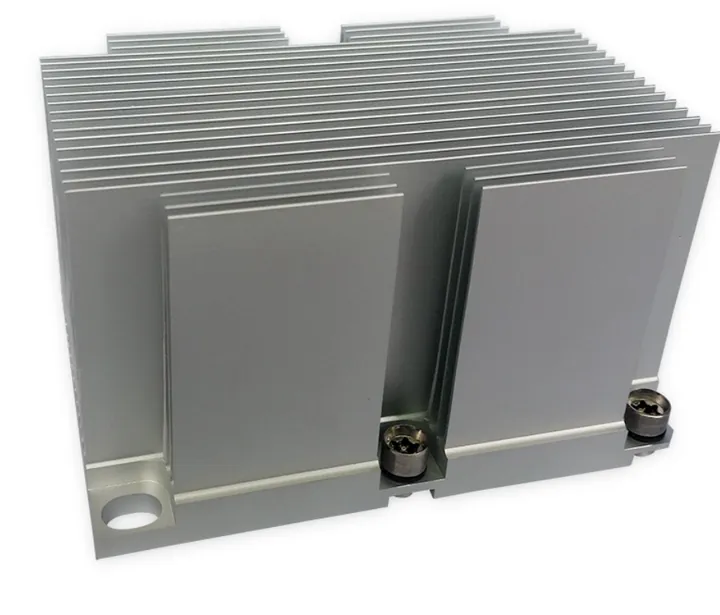
Key Industries Using 5-Axis
- Aerospace: Structural parts, turbine blades, housings — require tight tolerances, complex curves.
- Medical: Implants, surgical tools, orthopedic components — often made in small batches with exact tolerances.
- Automotive: Prototypes, EV components, engine parts — often need fast turnarounds with unique shapes.
- Tool & Die Making: Injection molds, dies, and tooling — benefit from precise and repeatable geometry.
- Energy: Gas turbine blades, pump parts — often feature complex curved surfaces, where 5‑axis shines.
- Custom Fabrication: For robotics, electronics, aerospace, or defense — anywhere design complexity exists.
Whether producing one-off parts or small runs of high-end components, premium 5-axis machines reduce production time, improve surface finish, and minimize human error.
Where are high-end 5-axis machines used?
Top-tier 5-axis machines are found where complexity and performance are critical.
High-end 5-axis machines are widely used in aerospace, medical, automotive, mold making, and energy sectors for their ability to handle precision jobs and complex designs.
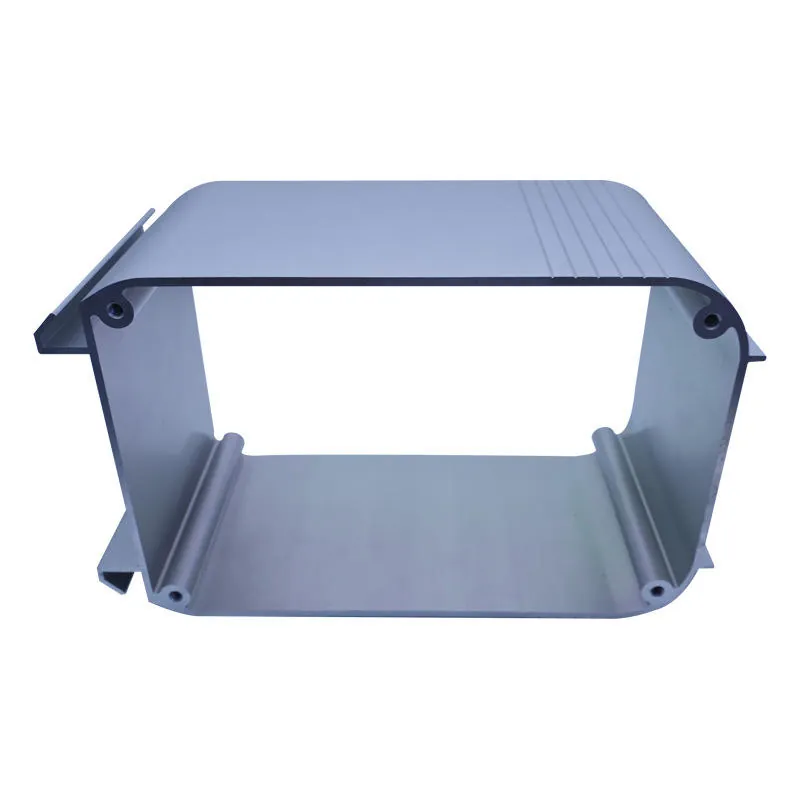
Common Use Scenarios
- Aerospace Manufacturers: Use full 5-axis machining for turbine blades, structural supports, brackets, engine parts.
- Medical Equipment Makers: Manufacture joint implants, bone plates, surgical tools with biocompatible metals and tight tolerances.
- Tool Shops: Cut molds with deep cavities, fine details, and smooth finishes in fewer setups.
- EV Startups and Auto Giants: Design lightweight frames, cooling plates, transmission housing in aluminum or composites.
- Defense Contractors: Produce radar brackets, UAV parts, precision mounts that must meet military-grade specs.
For smaller job shops, compact 5-axis CNC mills make it possible to deliver high-end parts for competitive sectors. Some adopt hybrid models — combining 3+2-axis with full 5-axis — to balance flexibility and cost.
Conclusion
5‑axis CNC machines stand out for precision, flexibility and efficiency. For companies needing complex geometry, tight tolerances, or fewer setups, investing in a high‑end 5‑axis machine often pays off in quality and productivity. Choosing the right model depends on what parts you make and your batch size.