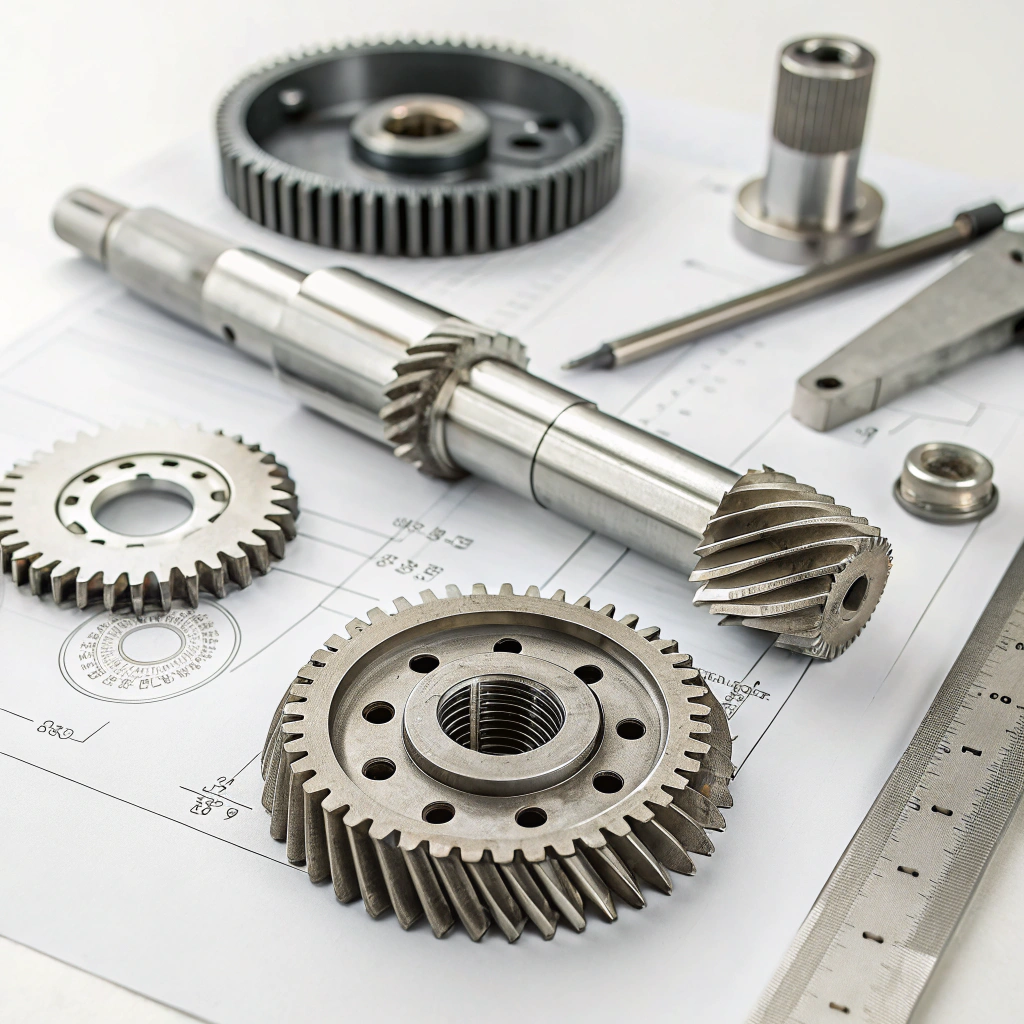
In engineering and manufacturing, terms like tolerance and allowance play a critical role in ensuring parts fit together and function as intended. While they may seem similar, they are distinct concepts that affect the precision and cost of production.
Tolerance refers to the permissible deviation from a specified dimension, while allowance is the intentional difference between the minimum and maximum limits of mating parts. These two concepts are fundamental in ensuring that parts can be manufactured within acceptable limits, maintaining both function and ease of assembly.
Tolerance ensures that even if parts are slightly different from the intended measurements, they will still work properly. Allowance, on the other hand, is used to determine how two parts will interact, ensuring they fit together with just the right amount of clearance or interference.
Why are Tolerance and Allowance Crucial in Design?
Tolerance and allowance are essential in design because they define the limits within which parts can be produced and still function properly in an assembly. These concepts help manage the balance between precision, performance, and cost in manufacturing.
Tolerance and allowance are crucial because they directly affect the manufacturability, performance, and cost of a product. By controlling these factors, designers can ensure that parts fit together with the required performance without excessive cost or complexity.
Ensuring Proper Fit and Function
Without tolerance and allowance, parts might not fit together as intended, leading to poor functionality or the need for costly rework. These allowances help ensure that parts will fit in the desired way, whether they need to slide, rotate, or remain stationary within an assembly.
Minimizing Production Costs
Allowances and tolerances also help control production costs. Tight tolerances may require more expensive manufacturing processes, which can increase production costs. Allowances provide some flexibility in part dimensions, reducing the need for expensive machining while maintaining acceptable performance.
Optimizing Performance and Durability
The proper application of tolerance and allowance can also enhance the performance and durability of a product. For example, in an engine, allowing for a small clearance between moving parts reduces friction, improving performance and extending the life of the components.
How to Apply Tolerance and Allowance Effectively?
To apply tolerance and allowance effectively, designers must carefully consider the function of the part, the manufacturing process, and the desired quality of the finished product. Properly applying these factors ensures that parts are made with the necessary precision, reducing waste and minimizing the risk of failure.
Applying tolerance and allowance effectively requires a clear understanding of the part's function, the cost implications, and the manufacturing capabilities. Here's how to do it properly:
Step 1: Understand the Function of the Part
Before applying tolerance and allowance, it’s important to understand how the part will be used in the final assembly. For example, if two parts need to fit together tightly for a mechanical seal, they might need very tight tolerances. If the parts are part of a loose fitting assembly, a larger tolerance range may be acceptable.
Step 2: Choose the Right Manufacturing Process
Different manufacturing processes have different capabilities. For example, machining and casting may have different levels of accuracy. When selecting the tolerance and allowance, it’s essential to consider the process being used and its typical capabilities to ensure the part can be produced without exceeding cost limitations.
Step 3: Consider the Impact on Assembly
The interaction between mating parts is critical when applying allowance. A proper allowance ensures that parts fit together with the right amount of clearance or interference. For example, a shaft and a bearing might require an interference fit, while two parts in a sliding mechanism may require a clearance fit to allow movement.
| Application | Tolerance Range | Allowance Type |
|---|---|---|
| Tight-fitting assemblies | Small tolerance values | Zero or negative allowance |
| Sliding parts or clearance fits | Moderate tolerance values | Positive allowance |
| Press fit or interference fit | Tight tolerances | Negative allowance |
Step 4: Balance Cost and Performance
Striking the right balance between performance and cost is essential when applying tolerance and allowance. Tight tolerances typically result in higher production costs, so it’s essential to determine the minimum acceptable tolerance for the part to perform its function. In many cases, relaxing some tolerances can significantly reduce costs without compromising functionality.
What Are the Evolving Standards in Tolerance and Allowance?

As technology advances, the standards and methods for applying tolerance and allowance are continuously evolving. Manufacturers are pushing for more precise, cost-effective methods while reducing the environmental impact of production.
The evolving standards in tolerance and allowance reflect advancements in manufacturing technology, automation, and global supply chains. These trends aim to improve efficiency, reduce waste, and ensure that tolerances are applied in ways that are sustainable and cost-effective.
Industry 4.0 and Automation
The rise of Industry 4.0, with its emphasis on automation and advanced manufacturing technologies, is changing how tolerance and allowance are applied. Automated processes, such as CNC machining, 3D printing, and robotic assembly, allow for tighter tolerances to be achieved with greater consistency and efficiency. These advancements also enable designers to optimize tolerance ranges in real time, improving both precision and production speed.
Advanced Materials and Their Impact
With the use of advanced materials such as composites and 3D-printed metals, the way tolerances and allowances are applied has also changed. New materials may have different thermal expansion properties or behave differently during manufacturing, requiring updated tolerance guidelines. As materials evolve, so too must the standards for applying tolerances and allowances.
Global Standardization
With manufacturing becoming increasingly globalized, standardized tolerance and allowance specifications are important to ensure consistent quality across different regions and suppliers. International standards such as ISO (International Organization for Standardization) and ASME (American Society of Mechanical Engineers) continue to refine the guidelines for tolerances and allowances, promoting consistency and compatibility across the global supply chain.
Sustainability Considerations
There is a growing trend towards sustainability in manufacturing, which is influencing the application of tolerances and allowances. Manufacturers are looking for ways to reduce material waste while maintaining performance. By applying more flexible tolerances where appropriate, manufacturers can reduce scrap and energy consumption, making the production process more sustainable.
Conclusion
In conclusion, tolerance and allowance are fundamental concepts in engineering and design that influence product fit, performance, cost, and manufacturability. By understanding the differences between them and applying them effectively, designers can optimize production efficiency, maintain product quality, and reduce costs. As manufacturing technologies continue to evolve, so will the standards for applying tolerance and allowance, helping manufacturers keep pace with the demands of modern production.